

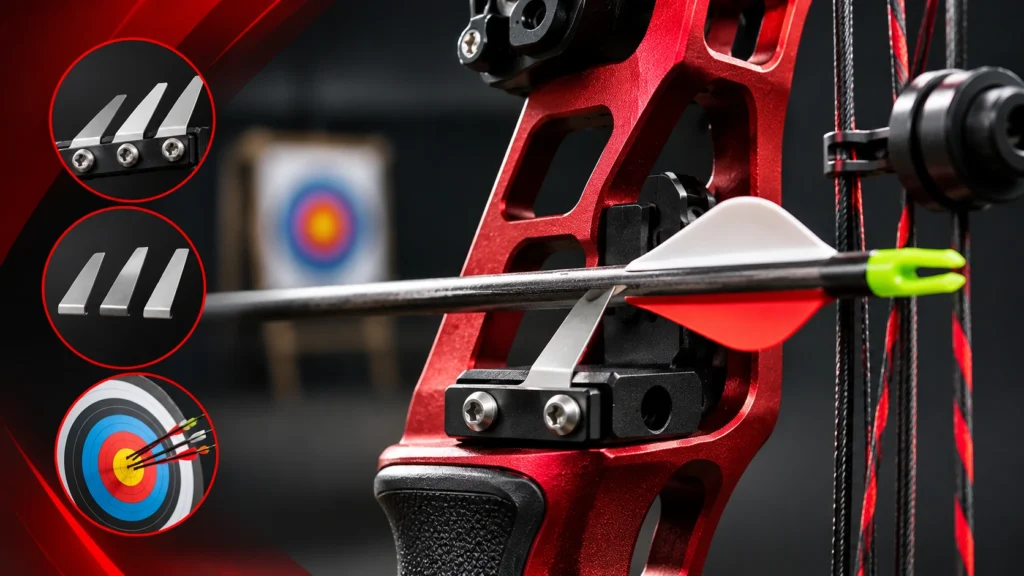
Why Blade Arrow Rests Continue to Matter in Modern Compound Archery
Compound archery has changed considerably over the years. Modern bows feature advanced cam systems, lightweight materials, improved stabilisation, and a wide range of accessories designed to support different shooting preferences. While much of the attention goes to bows, sights, and stabilisers, smaller components also contribute to the overall equipment setup. One example is the blade arrow rest.
Although several arrow rest designs are available today, blade-style systems continue to attract interest among compound archers, particularly those who value a straightforward design and a defined supporting surface. Their construction is relatively simple, but choosing a suitable blade involves understanding arrow support, clearance, flexibility, and compatibility.
The continued presence of blade-style designs also highlights an interesting aspect of archery equipment: technological development does not necessarily make established designs irrelevant. Instead, different systems continue to serve different shooting preferences and equipment requirements.
Why Small Equipment Components Matter in Compound Archery
A compound bow is a complete system in which individual components work together. The riser, limbs, cams, strings, stabilisers, sights, arrows, and accessories all contribute to the overall shooting configuration.
The arrow rest has a particularly important role because it supports the arrow before and during its movement away from the bow. Its position, construction, and compatibility with the arrow can influence clearance and the consistency of the equipment setup.
This is why experienced archers pay attention to details that may appear relatively minor. A component does not have to be large or complicated to deserve careful selection.
A blade arrow rest represents one approach to arrow support. Instead of surrounding the arrow with a larger structure, it uses a narrow launcher blade to provide a supporting surface. This design offers a different experience from containment and drop-away systems, making it relevant to archers who prefer a more traditional target-oriented configuration.
The Continued Appeal of Simple Archery Equipment
Modern archery equipment often includes advanced adjustment systems and mechanical features. However, simplicity remains an important consideration when choosing accessories.
A straightforward design can make it easier to understand how a component works, inspect its condition, and identify potential problems. It can also reduce the number of mechanical parts that need routine attention.
This is one reason blade-style arrow rests continue to have a place in compound archery. Their supporting mechanism is based on a launcher blade rather than a complicated activation system. The arrow rests on the blade before release and moves forward as the bowstring is released.
This does not mean that a simple design is automatically suitable for every archer. Blade selection still involves technical considerations, including arrow diameter, blade stiffness, width, and the clearance available within the bow configuration.
The important distinction is that simplicity and precision are not opposing ideas. A straightforward component can still require careful selection and adjustment to work properly within a complete bow setup.
Blade Arrow Rest Design and Its Place in Target Archery
The blade arrow rest is commonly associated with compound target archery because of its narrow supporting surface and relatively uncomplicated construction.
The launcher blade provides a defined point of contact for the arrow. Unlike a containment rest, it does not surround the arrow with bristles or a larger supporting structure. It also differs from a drop-away system, which uses a moving mechanism to lower the support during the shot.
One of the main considerations with a blade design is how the arrow interacts with the supporting surface. The blade needs to provide suitable support while allowing the arrow and its fletching to clear the rest during release.
This is particularly important for archers who use different arrow diameters or fletching configurations. A setup that works with one arrow may require additional checking when the arrow specifications change.
The design also allows archers to consider individual launcher characteristics rather than treating every arrow rest as identical. Blade width, thickness, material, and flexibility all contribute to the characteristics of the supporting component.
How Different Arrow Rest Designs Reflect Different Shooting Styles
The development of arrow rest technology has produced several designs, each with different characteristics. Choosing between them is largely a matter of equipment compatibility and shooting requirements.
| Arrow Rest Type | Main Design | Important Consideration |
|---|---|---|
| Blade Arrow Rest | Supports the arrow on a narrow launcher blade | Blade stiffness, width, and arrow clearance |
| Prong Arrow Rest | Supports the arrow using one or more prongs | Prong spacing and arrow positioning |
| Drop-Away Arrow Rest | Uses a moving support that drops away during release | Activation timing and mechanical setup |
| Containment Rest | Surrounds or partially surrounds the arrow | Arrow retention and fletching clearance |
Blade-style designs offer a relatively simple supporting structure. Prong rests provide support through separate contact points, while drop-away rests are designed to move out of the arrow’s path. Containment rests focus more on keeping the arrow in position during movement.
The comparison between a blade vs drop away arrow rest is therefore not simply about which design is newer. Each has different requirements, and the most appropriate option depends on the bow, arrow configuration, shooting discipline, and the archer’s preferences.
For target-focused archers, the simplicity of a blade-supported system can be an appealing characteristic. Other archers may prefer a different design because of their shooting conditions or equipment requirements.
Why Blade Thickness and Flexibility Deserve More Attention
A launcher blade may look like a small part of an arrow rest, but its specifications can influence how it supports the arrow.
Arrow rest blade thickness is one of the characteristics archers commonly compare when selecting equipment. Thickness is related to stiffness, although the final behaviour also depends on material, blade width, shape, and construction.
A blade that is too flexible for a particular setup may not provide the required support. On the other hand, a blade that is too stiff may not respond as intended during release and can contribute to clearance problems.
This is why selecting a blade based only on its thickness is not recommended. Archers should consider the manufacturer’s specifications and the characteristics of their arrows.
Common Launcher Blade Thickness Options
Launcher blades are available in different thickness specifications. The following chart compares three commonly discussed thickness options. These measurements are equipment specifications, not results from a controlled test comparing accuracy or performance.
Launcher Blade Thickness Comparison
| Blade Thickness | Measurement (mm) | Relative Thickness |
|---|---|---|
| 0.008 inch | 0.203 mm | ██████ |
| 0.010 inch | 0.254 mm | ████████ |
| 0.012 inch | 0.305 mm | ██████████ |
These options illustrate how launcher blade specifications can differ. A thicker blade is not automatically better. The correct selection depends on the arrow weight, blade material, design, and the manufacturer’s recommendations.
Blade Width and Overall Size
Blade width is another consideration when choosing an arrow rest. A wider blade provides a different supporting surface from a narrow one, but the additional width must still be appropriate for the arrow and its fletching.
Archers should consider the relationship between blade size and clearance. If the supporting blade is unnecessarily wide, it may increase the possibility of unwanted contact with the arrow’s vanes during release.
For this reason, blade arrow rest size should be selected according to the intended application rather than appearance alone.
The Relationship Between Arrow Clearance and Consistent Shooting
Arrow clearance is one of the most important considerations in a compound bow setup. The arrow needs to move forward without unwanted contact between its shaft or fletching and the rest or surrounding bow components.
Launcher-style rests are particularly relevant to this discussion because the arrow remains supported as it travels forward. This makes the relationship between blade width, arrow diameter, fletching position, and rest alignment important.
A blade arrow rest that is not appropriately matched to the arrow may create contact problems. These can sometimes be identified through visible marks on the fletching or rest, or through suitable tuning checks.
The solution is not always to change the arrow rest. Arrow spine, nocking point, cam timing, and other equipment characteristics can also influence arrow behaviour. Changes should therefore be assessed as part of the complete bow setup.
Technical discussions about blade stiffness and angle also highlight why selecting an appropriate blade is more important than simply choosing the stiffest available option.
Why Equipment Compatibility Matters More Than Appearance
Archery equipment is often compared through product photographs, specifications, and user reviews. Although these can help narrow down the available choices, compatibility should remain a priority.
When considering compound bow arrow rest blades, archers should check several characteristics:
- Whether the mounting system is compatible with the bow.
- Whether the available adjustment range suits the required setup.
- Whether the blade dimensions match the intended arrow configuration.
- Whether the blade provides appropriate support and clearance.
- Whether compatible replacement blades are available.
- Whether the manufacturer provides installation and maintenance information.
These considerations help prevent the common mistake of choosing equipment based only on appearance or general product descriptions.
Blade arrow rest reviews can also provide useful information about user experiences. However, reviews should be considered alongside technical specifications. A product that works well for one archer may not be the right choice for another bow or arrow configuration.
The Importance of Proper Equipment Alignment
A consistent equipment setup involves more than installing an arrow rest and leaving it unchanged. Horizontal position, vertical alignment, blade angle, and the relationship between the arrow and bowstring all deserve attention.
Technical compound archery references explain that the centre of the arrow should align with the centre of the blade, with the horizontal position established in relation to the riser. They also discuss vertical alignment around the Berger hole and identify approximately 30 to 40 degrees as a typical starting range for blade angle.
These measurements are useful technical references, but they should not be treated as universal instructions for every bow. Different rest designs and bow configurations may require different settings.
The same principle applies to blade arrow rest setup and tuning. The objective is to establish a compatible configuration in which the arrow is properly supported and can clear the rest during release.
When changes are made to the arrow, nocking point, or rest position, the complete setup should be checked again.
Maintenance and the Long-Term Value of Replaceable Components
Equipment maintenance is another reason to understand the construction of an arrow rest. Even a relatively simple design requires periodic inspection.
The launcher blade should be checked for bending, damage, and signs of wear. Mounting hardware should remain secure, and the arrow should sit consistently on the supporting surface.
Arrow rest replacement blades are also worth considering when evaluating equipment. Replacement availability can make it easier to maintain a suitable setup if the original blade becomes damaged or unsuitable.
However, replacement components should always match the specifications of the rest. Not every launcher blade is interchangeable, and differences in dimensions or mounting arrangements can affect compatibility.
Routine inspection is particularly useful after changing arrows, making adjustments, or transporting equipment. These small checks help identify problems before they become part of the regular shooting setup.
How Archery Equipment Continues to Evolve
Archery manufacturers continue to develop equipment that reflects different shooting preferences. Modern designs may introduce additional adjustment options, different materials, and alternative approaches to arrow support.
However, established designs can remain relevant when they continue to meet practical requirements.
The blade-style arrow rest is an example of this. Its basic supporting principle remains straightforward, but the details of blade construction and compatibility still provide opportunities for refinement.
For some archers, a simple design with minimal mechanical components is an important consideration. Others may prefer more elaborate systems because of their particular equipment requirements.
Neither preference should be considered universally correct. The most useful approach is to understand the available designs and choose equipment that works as part of the complete bow system.
Final Thoughts
The continued use of blade-style arrow rests shows that straightforward equipment still has a place in modern compound archery. Their narrow supporting surface and relatively simple construction make them a relevant option for archers who value a defined arrow support system.
However, selecting a suitable blade involves more than choosing a product that looks appropriate. Blade thickness, width, flexibility, mounting compatibility, and arrow clearance all deserve attention.
By understanding these characteristics, archers can make more informed equipment decisions and build a setup that reflects their shooting requirements. In a sport where consistency depends on the relationship between many individual components, even a small part such as an arrow rest deserves careful consideration.