

The Changing Role of Crossbow Targets in Modern Archery
Modern crossbow shooting has become an important part of contemporary archery. Equipment performance, shooting consistency, and practice conditions all influence the experience. Crossbows now feature advanced mechanisms, improved materials, and higher bolt speeds. These developments have also increased interest in accessories that support different shooting requirements. Among these components, the crossbow target plays an important role.
A target does much more than provide an aiming surface. Its construction, material, dimensions, and stopping capabilities influence every practice session. As crossbow technology advances, manufacturers continue to develop target designs for different speeds, projectile types, and shooting environments.
The growing variety of crossbow targets reflects these changing requirements. Traditional bag-style designs now share the market with modern foam, layered, and heavy-fabric constructions. Each design offers different characteristics and serves particular shooting preferences. This development shows why target design remains an important part of modern archery.
How Crossbow Shooting Continues to Evolve
Archery equipment has changed considerably over the years. Modern crossbows combine advanced limb systems, improved mechanisms, lightweight materials, and refined construction. These developments have changed what archers expect from their accessories.
One noticeable change involves bolt speed. Many modern crossbows generate higher speeds than older models. Consequently, archers need to pay closer attention to the targets they use during practice.
Manufacturers now produce dedicated crossbow targets with specific speed ratings and construction characteristics. Rather than treating every archery target as interchangeable, they distinguish between products for traditional bows and those for crossbows.
Performance is not the only consideration behind these developments. Portability, target-face design, material durability, and maintenance also influence modern target construction.
The Connection Between Crossbow Performance and Target Construction
A crossbow transfers considerable energy to a bolt during release. The target must handle that impact while remaining suitable for the equipment and projectile. Its internal material and overall construction influence how it responds to repeated shots.
FPS, or feet per second, remains one of the most frequently discussed specifications. This measurement describes bolt speed and helps archers compare crossbow and target specifications.
However, speed alone does not explain every aspect of impact performance. Bolt weight, projectile design, and manufacturer testing conditions also influence the demands on a target.
These differences explain why modern crossbow target designs vary considerably. Some models focus on regular field-point practice, while others accommodate particular projectile applications.
A published speed rating helps archers identify a target’s intended performance range. Nevertheless, they should always check the manufacturer’s approved projectile specifications. One rating does not automatically make a target suitable for every bolt or point.
Why Target Materials Matter in Modern Archery
Target materials influence stopping resistance, durability, portability, and maintenance. Manufacturers use different constructions to meet the requirements of various shooting disciplines.
Traditional bag targets generally feature an outer cover and specialised internal filling. Many archers use them for repeated field-point practice. Certain models also hang freely, allowing the target to move and absorb incoming bolt impact.
Foam targets use engineered materials to provide resistance. Manufacturers develop different foam constructions for particular crossbow applications. Some designs also accommodate approved broadhead use.
Layered and heavy-fabric constructions offer another approach. Multiple material layers or dense internal filling help these targets manage incoming bolts while maintaining a practical shape.
These categories demonstrate why the term archery targets covers a wide range of products. Two targets may look similar from the outside but contain very different internal materials.
For modern crossbow users, the most important consideration is compatibility. The complete target construction must match the intended crossbow and projectile configuration.
Different Crossbow Target Designs and Their Characteristics
Target designs reflect the different ways archers approach practice. Some models focus on repeated field-point shooting, while others address particular projectile requirements or higher-speed crossbow applications.
| Target Design | General Construction | Common Considerations |
|---|---|---|
| Bag Target | Outer fabric cover with specialised internal filling | Field-point compatibility, hanging arrangement, and material wear |
| Foam Target | Engineered foam material | Density, approved projectile types, and bolt removal |
| Layered Target | Multiple material layers | Stopping characteristics, construction quality, and maintenance |
| Heavy-Fabric Block | Dense fabric-based internal filling | Speed rating, dimensions, portability, and repeated use |
| 3D Archery Target | Three-dimensional shaped construction | Practice realism, material durability, and intended bow compatibility |
Each construction serves a different purpose. Manufacturer specifications provide the most reliable starting point when archers compare these designs.
The Growing Importance of Crossbow Target Speed Ratings
Speed ratings have become an important part of modern target specifications. As crossbows develop, manufacturers continue to introduce products for different performance categories.
A published FPS rating indicates the manufacturer’s stated speed limit under specified conditions. However, this figure does not guarantee a particular target lifespan or compatibility with every projectile.
For example, TenPoint discusses a speed range of approximately 350–430 FPS for many foam and bag-style crossbow targets. Its guidance also highlights the importance of allowing suspended bag targets to move during use.
This information demonstrates how target construction and shooting conditions influence the intended application.
Published Crossbow Target Speed Ratings
The following research comparison brings together speed specifications and ranges mentioned in manufacturer guidance and published crossbow target reviews.
| Published Speed Reference | Source Context | What It Illustrates |
|---|---|---|
| 350–430 FPS | TenPoint target guidance | Common range discussed for many foam and bag crossbow targets |
| 425 FPS | Crossbow Magazine product comparison | Example of a moderate-to-high-speed target rating |
| 450 FPS | Crossbow Magazine product comparison | Example of a higher published speed rating |
| 520 FPS | Crossbow Magazine product comparison | Example of a higher-performance target specification |
| 650 FPS | Crossbow Magazine product comparison | Example of an especially high published field-point rating |
Visual Comparison of Published FPS Figures
| Speed Reference | Relative Scale |
|---|---|
| 350 FPS | █████ |
| 400 FPS | ██████ |
| 430 FPS | ███████ |
| 450 FPS | ███████ |
| 520 FPS | ████████ |
| 650 FPS | ██████████ |
Chart note: The bars represent relative FPS values, using 650 FPS as the maximum reference. TenPoint provides the 350–430 FPS range in its general target guidance. Crossbow Magazine provides the 425, 450, 520, and 650 FPS examples in its target comparisons. The 400 and 430 FPS entries serve as additional scale references, not independent product test results. These figures do not represent a controlled performance test or a market-wide statistical distribution.
This comparison highlights the range of speed specifications that appear in modern crossbow target discussions. Archers should compare these figures with their actual crossbow and bolt configuration before selecting a target.
Why Durability Matters During Regular Archery Practice
Repeated shooting places considerable demands on target materials. Even a well-constructed design can gradually show wear when bolts repeatedly strike the same area.
Several factors influence durability, including material density, internal construction, projectile type, shooting frequency, and environmental conditions.
Impact distribution also plays an important role. Concentrating shots in one small area can create localised wear. Using different approved target faces helps distribute practice impacts more evenly.
Multiple-face designs have therefore become an attractive feature in modern archery targets. They provide additional aiming surfaces and help archers make better use of the available target area.
However, additional faces do not prevent material deterioration. Archers should inspect the target regularly and replace damaged equipment according to the manufacturer’s safety guidance.
Portable Crossbow Targets and Changing Practice Environments
Not every archer has access to a permanent shooting range. Some practise at designated outdoor facilities, while others use suitable private areas where crossbow shooting is permitted.
This has increased interest in portable target designs. Their dimensions, weight, carrying arrangements, and overall shape influence how easily archers can transport them.
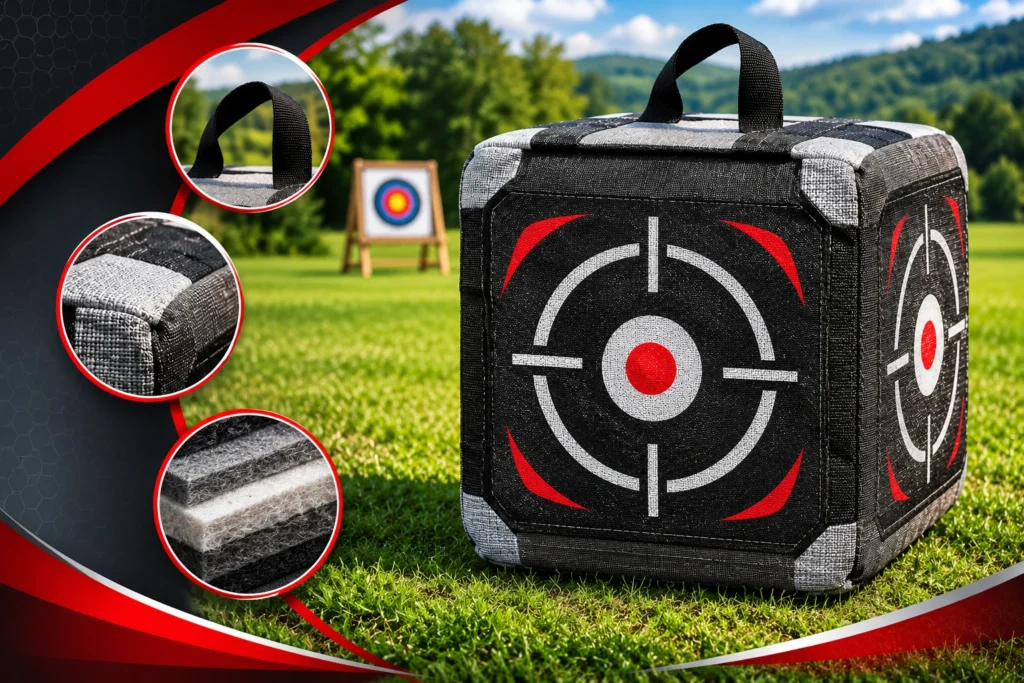
Compact block designs offer a practical alternative to larger permanent target structures. Carrying loops or handles make transportation easier, especially when archers move equipment between storage and a permitted shooting location.
A cube-shaped design offers an interesting balance between usable surface area and compact dimensions. Multiple faces can also provide different aiming patterns without requiring a separate target for each arrangement.
For archers comparing these characteristics, a crossbow target with a published rating of up to 400+ FPS, heavy-fabric filling, four usable sides, and carrying loops represents one example of a compact portable design.
Portability should never replace stopping performance as a priority. A lightweight target may not suit a high-speed crossbow. Archers must still check the manufacturer’s speed rating and compatibility requirements.
The Role of Target Dimensions and Design
Target dimensions influence more than the amount of available aiming space. Width, height, and depth all contribute to the product’s construction and practical use.
A larger target provides more visible aiming space, but it may require additional storage room. In comparison, a compact target offers easier transportation, although its available shooting surface may be smaller.
Depth also matters because internal materials need enough space to provide the stopping performance specified by the manufacturer.
For this reason, archers should consider the complete design rather than judge a product by one measurement.
A portable block measuring approximately 40 × 40 × 40 cm offers a different balance of dimensions from a large rectangular range target. When combined with a published rating of up to 400+ FPS, heavy-fabric filling, four usable sides, and carrying loops, this construction represents a practical option in the portable crossbow target category.
These characteristics show how manufacturers balance stopping requirements with transportation and storage needs.
Field Points and Broadheads: Two Different Target Applications
Projectile compatibility creates another important distinction between crossbow target designs. Field points and broadheads have different shapes, and each interacts with target materials differently.
Field points commonly support regular practice. Their relatively streamlined shape works with many target designs, provided the manufacturer approves the crossbow’s speed and bolt specifications.
Broadheads feature cutting edges that can damage materials designed primarily for field-point shooting. They may also become difficult to remove from certain target constructions.
Therefore, a field-point-rated target does not automatically qualify as broadhead-compatible. Archers should only use broadheads when the manufacturer explicitly approves them.
This distinction matters when comparing crossbow targets for hunting practice with products for general target shooting. Each application places different demands on the target, so suitable construction helps prevent unnecessary damage.
How Target Maintenance Fits Into the Modern Shooting Experience
Archery equipment requires regular attention, and the target deserves the same care. Repeated impacts, transportation, and environmental exposure can gradually affect its condition.
Regular inspections should cover the outer cover, internal shape, visible damage, and designated shooting surfaces.
Suitable storage also helps protect target materials. Excessive moisture, prolonged exposure to unsuitable weather, and improper handling may shorten their useful life.
Replacement covers offer another useful feature when archers compare long-term maintenance options. However, a new cover cannot restore internal material that has already lost its stopping characteristics.
Ultimately, archers should continue using a target only while it meets the manufacturer’s approved safety and performance requirements.
Crossbow Targets as Part of the Wider Archery Experience
Modern archery involves much more than the bow itself. Bolts, sights, accessories, protective equipment, and practice facilities all contribute to the shooting experience.
Targets occupy an important position within this system because they connect equipment performance with the practical activity of shooting.
Beginners use them as a designated surface for learning and developing consistency. Experienced archers also rely on suitable targets during regular practice and equipment assessments.
For crossbow users, the growing range of speed ratings and construction types reflects changing equipment expectations.
The same development appears across the wider market for bow targets and archery targets. Manufacturers continue to introduce products for different disciplines, environments, and shooting preferences.
Final Thoughts
The changing role of the crossbow target reflects the wider development of modern archery. As crossbows become more advanced, target designs continue to address different speed ratings, materials, projectile applications, and practice environments.
Stopping performance remains essential, but durability, portability, dimensions, and maintenance also influence the overall experience. No single design meets every requirement, which makes published specifications particularly important.
Ultimately, a target forms an important part of the complete shooting setup. Its construction and approved applications should match the equipment in use. This approach helps archers build a more consistent practice routine while keeping equipment compatibility and safety in focus.