

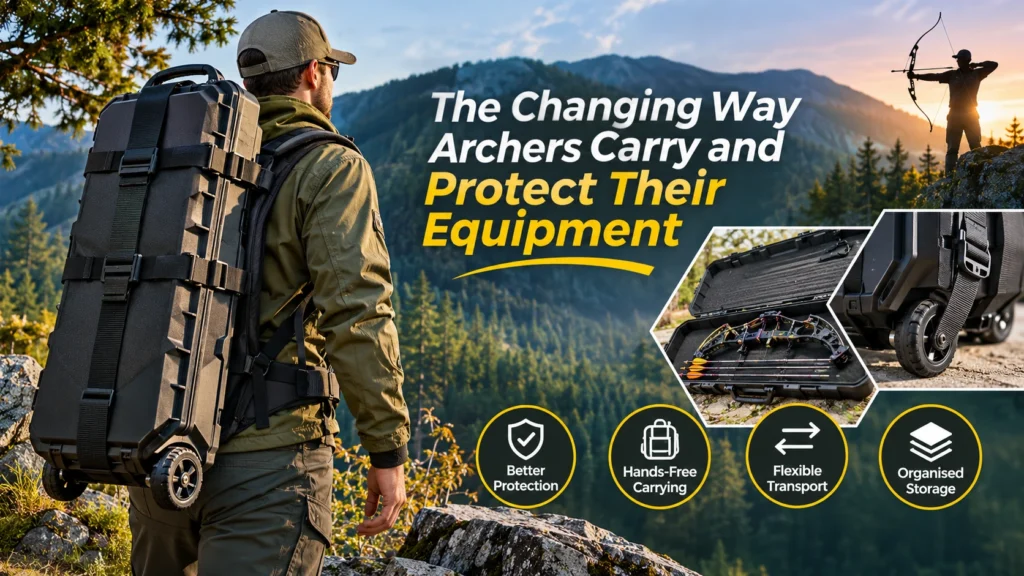
The Changing Way Archers Carry and Protect Their Equipment
Archery has always involved more than the moment an arrow leaves the bow. Behind every shooting session is a collection of equipment that needs attention, organisation, and proper handling. From the bow itself to smaller accessories, every item plays a role in the overall experience.
As archers move between home, practice facilities, competitions, and outdoor locations, the way they transport their equipment becomes increasingly important. A suitable storage arrangement helps protect valuable gear, while practical carrying options make everyday movement more convenient.
This is one reason the hard bow case remains relevant across different areas of archery. It provides a protective structure for equipment, but modern archers also consider weight, storage, transportation, and carrying comfort when organising their setups.
Archery equipment has evolved, and so have the expectations surrounding it. Today, a case is not simply a container for a bow. It is part of a wider system that helps archers manage their equipment before, during, and after every shooting session.
Archery Equipment Is Part of a Bigger Routine
For many people, archery is a regular activity that involves planning and preparation. Equipment may need to travel from home to a local range, from a vehicle to an outdoor shooting location, or between different competition venues.
Each journey creates different practical requirements. An archer attending a nearby indoor range may only need a straightforward carrying arrangement. Someone travelling for a competition may carry a bow, arrows, accessories, tools, clothing, and other personal equipment.
These differences influence how people organise their gear. A suitable archery case can keep the bow protected and separate from other belongings. Additional compartments may also help prevent smaller accessories from becoming misplaced.
The overall experience depends on more than the case itself. How easily an archer can lift, carry, move, and store the equipment also matters.
Why Equipment Protection Matters Beyond the Shooting Range
A bow contains components that deserve careful handling. Depending on its design, these may include limbs, strings, cables, cams, a riser, sights, and other accessories.
During transportation, equipment can move around if it does not have suitable support. Contact with other objects may cause scratches, while external pressure can create problems for delicate components.
A hard bow case provides a rigid outer structure that can help protect equipment against external contact and pressure. Internal padding, straps, and compartments can further reduce unnecessary movement.
Protection also matters when equipment stays at home. A case can help keep a bow organised between shooting sessions and reduce its exposure to dust or accidental contact with other stored items.
However, no case replaces proper equipment care. Archers should still store their gear in suitable conditions and inspect components regularly. A case is one part of responsible equipment ownership, not a substitute for maintenance.
How Bow Cases Have Become Part of Archery Equipment
Different types of bows create different storage requirements. A compound bow has a distinct shape and includes components that need sufficient internal clearance. A recurve bow may have detachable limbs and a separate riser, depending on its construction.
This is why bow cases are available in several formats. Some focus on rigid protection, while others prioritise lighter construction and convenient everyday carrying.
A compound bow case needs to accommodate the bow’s overall dimensions without putting unnecessary pressure on its limbs, cams, or cables. The internal layout matters just as much as the external size.
A recurve bow case may instead provide separate spaces for the riser, limbs, string, and accessories. Traditional bows can require longer compartments because their dimensions and construction differ from compound bows.
Choosing a case that matches the bow type helps create a more organised storage arrangement. It also reduces the risk of selecting a design that looks suitable externally but does not provide the required internal space.
Hard and Soft Cases Reflect Different Archery Needs
Archers do not all transport their equipment in the same way. Some prioritise a rigid structure for demanding journeys, while others prefer lighter equipment for routine trips to the range.
A compound bow hard case generally offers a more rigid exterior. Its construction can help resist external pressure and provide a protective barrier around the bow. Depending on the design, it may also include internal foam, straps, and accessory compartments.
A soft bow case usually uses fabric construction with padding. It may be easier to carry and store, especially when an archer has limited space. However, it generally offers less resistance to crushing than a rigid design.
Hybrid designs sit between these two categories. They may combine reinforced sections with flexible materials to balance protection and portability.
The right option depends on the bow, the journey, and the conditions in which the equipment will travel. A case should suit the actual routine rather than simply look impressive.
Archery Participation Across Different Age Groups
Archery attracts participants from different age groups, and their equipment requirements can vary. Younger participants may travel to organised programmes or school facilities, while adult archers may attend clubs, practice ranges, competitions, or outdoor locations.
Research published by the U.S. Fish and Wildlife Service provides useful insight into archery participation in the United States. Its 2022 National Survey of Fishing, Hunting, and Wildlife-Associated Recreation reports archery target-shooting participation rates across several age groups.
The figures show that participation rates are not identical across age categories. The highest rate in the reported groups appears among participants aged 6 to 15, followed by those aged 16 to 17.
These statistics describe participation in archery target shooting. They do not measure bow-case ownership, transportation preferences, or demand for particular accessories. However, they provide useful context about the range of people involved in the sport.
Research Chart: Archery Target-Shooting Participation by Age
U.S. Archery Target-Shooting Participation Rates by Age Group
Reported participation rates from the 2022 National Survey of Fishing, Hunting, and Wildlife-Associated Recreation.
Source: U.S. Fish and Wildlife Service, 2022 National Survey of Fishing, Hunting, and Wildlife-Associated Recreation. Values represent participation rates, not percentages of bow-case ownership or sales.
The chart illustrates how archery participation varies across age groups. It also provides a broader picture of the different people who may need to transport and organise archery equipment.
The Practical Side of Carrying Archery Equipment
Transporting a bow case can become inconvenient when the journey involves more than a short walk. Large facilities, outdoor ranges, stairs, parking areas, and competition venues may all require different ways of moving equipment.
A traditional handle works well for lifting a case over a short distance. However, carrying a case by hand for an extended period can become tiring, particularly when the archer also needs to manage a backpack, arrows, or other accessories.
This is where carrying comfort becomes an important part of equipment organisation. A suitable back-carrying arrangement can allow an archer to carry compatible equipment while keeping both hands available for other belongings.
For people who travel regularly, this type of flexibility can make moving between locations more manageable. It also gives archers another way to handle equipment when a conventional hand-carrying method is less convenient.
Why Flexible Carrying Options Matter
Modern transportation needs are not always the same throughout a journey. Wheels can be convenient on smooth floors, pavements, and other suitable surfaces. However, stairs, uneven paths, and crowded areas may make wheeled transportation less practical.
A back-carrying system offers a different approach. Instead of relying entirely on wheels or a single handle, compatible equipment can be carried on the back when the situation requires it.
Some carrying arrangements also combine wheels and back straps. This provides the option of rolling equipment on suitable surfaces and carrying it when the route changes.
Such flexibility can be useful for archers who move between vehicles, indoor facilities, outdoor locations, and accommodation during competitions or trips.
For compatible cases, a hard bow case carrying arrangement can be converted from conventional back transportation to a combined back-and-wheel setup. This type of system offers another way to move equipment while keeping hands free and distributing weight more effectively.
Compatibility remains essential. Not every case supports an additional carrying attachment, so archers should check the case’s construction and attachment points before selecting an accessory.
Comparing Different Bow Case Carrying Arrangements
The way a bow case moves can influence the overall transportation experience. Different carrying arrangements offer different practical benefits, depending on the case design and the route.
| Carrying Arrangement | Main Advantage | Practical Consideration |
|---|---|---|
| Traditional Handle | Simple lifting and short-distance movement | Requires one hand to carry the case |
| Shoulder Strap | Allows hands-free carrying in suitable situations | Comfort depends on weight and strap design |
| Back-Carrying System | Keeps hands available for other equipment | Requires compatible case attachment points |
| Wheeled Case | Convenient movement across smooth surfaces | Less convenient on stairs and uneven ground |
| Combined Wheels and Back Straps | Offers more than one transportation method | Depends on the case and carrying-system compatibility |
There is no single arrangement that suits every situation. The best solution depends on the case’s weight, the distance involved, the available surfaces, and the amount of additional equipment being carried.
Keeping Different Archery Accessories Organised
A bow is rarely the only item an archer takes to a shooting session. Depending on the equipment setup, the case may travel alongside arrows, releases, sights, stabilisers, tools, and personal accessories.
A well-organised bow and arrow case can help keep related equipment together. Internal dividers and separate compartments can reduce unnecessary contact between items and make preparation easier.
Archers should also consider the difference between storage capacity and practical organisation. A large case does not automatically provide a useful layout. The internal arrangement should keep equipment secure and allow easy access when needed.
Smaller accessories should have suitable storage spaces so that they do not move freely around the main compartment. This becomes particularly important when equipment travels over longer distances.
Choosing Equipment That Fits Your Routine
Every archer has a different routine. Some visit the same local range several times a week, while others travel to competitions or outdoor locations throughout the year.
These habits influence the type of archery case and carrying arrangement that makes sense. A lightweight soft case may suit short journeys, while a rigid hard case may be preferable when stronger external protection is a priority.
Archers using compound equipment should check the internal dimensions of a case for a compound bow. Those using traditional equipment should look for a recurve bow case or another design that matches the bow’s construction.
Transportation should also be part of the decision. Consider whether the case will be carried by hand, placed in a vehicle, moved on wheels, or carried on the back with a compatible attachment.
Looking at the complete journey helps create a more practical setup. Protection, storage, weight, and carrying comfort should work together rather than being considered separately.
Final Thoughts
Archery equipment deserves attention beyond the shooting range. A suitable hard bow case can help protect a bow during storage and transportation, while an organised interior makes it easier to manage accessories.
However, the overall experience also depends on how easily the equipment moves between locations. Handles, shoulder straps, wheels, and compatible back-carrying systems each offer different advantages.
As archers continue to travel between practice facilities, competitions, and outdoor locations, flexible transportation options remain an important part of equipment organisation. The right setup is one that supports the bow, suits the archer’s routine, and makes carrying and storing equipment more convenient.