

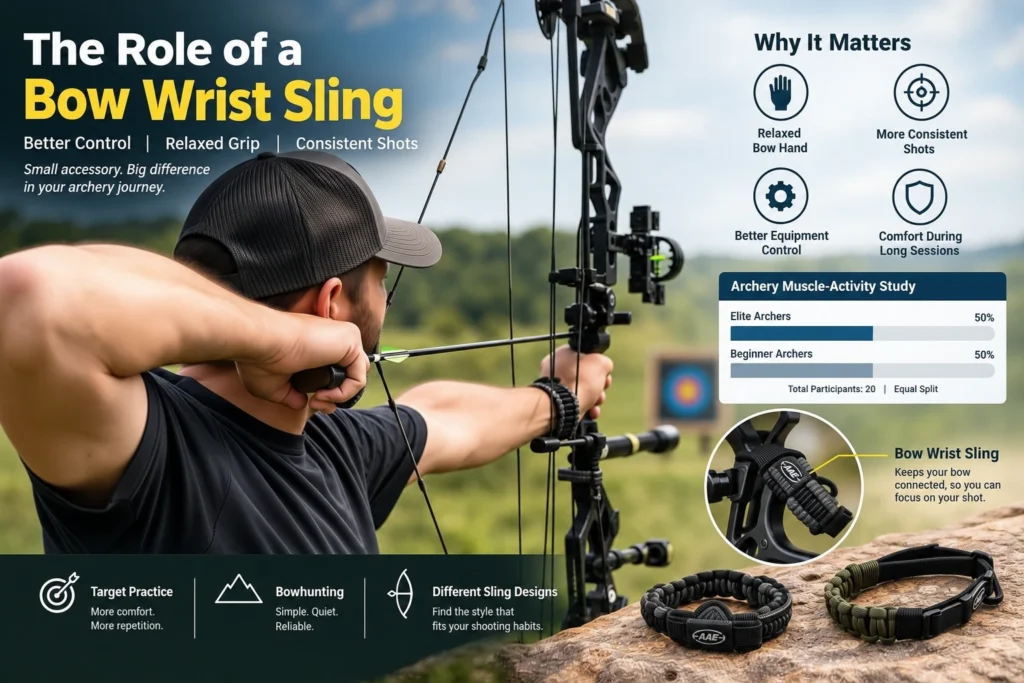
The Connection Between an Archer, the Bow, and a Consistent Shot
Good archery is built around consistency. The bow, the archer, and the small pieces of equipment connecting the two all have a role in creating a repeatable shooting process. While major components such as the sight, rest, stabilizer, and release receive most of the attention, smaller accessories can also influence how comfortable and natural the bow feels during a shot.
One of those accessories is the sling. A properly fitted sling can provide a controlled connection between the archer and the bow while allowing the bow hand to remain relaxed. This is particularly relevant with compound bows, where grip pressure and hand position can have a noticeable effect on shooting habits.
The relationship is not about adding another complicated step to the shot. Instead, it is about creating a setup that supports a consistent hand position and allows the bow to behave naturally after the release.
Why the Relationship Between Hand and Bow Matters
The bow hand is one of the most important contact points in the entire shooting process. An archer needs enough control to position the bow correctly without unnecessarily tightening the fingers around the grip. Excessive gripping can introduce unwanted movement and make it harder to reproduce the same hand position from one shot to the next.
This is where an archery wrist sling can become useful. Rather than depending entirely on the fingers to keep the bow connected to the hand, the sling creates an additional point of support around the wrist. The archer can maintain a relaxed hand position while still having a physical connection to the bow.
For compound bow users, this can be especially practical because the bow can move forward or settle naturally after the shot without requiring the archer to immediately grab the grip. The goal is not to force the bow into a particular movement, but to reduce unnecessary interference from the shooting hand.
Small Equipment Details Can Influence Shooting Habits
Archery equipment is often discussed in terms of major components, but small accessories can influence how an archer interacts with the bow. A bow strap, for example, may look simple, yet its position, adjustment, and material can change how connected the bow feels during shooting.
Different archers also have different preferences. Someone shooting several hundred arrows during practice may prioritize comfort, while a bowhunter may care more about simplicity and secure attachment. Competitive archers can have another set of preferences based on their shooting style and equipment configuration.
That is why there is no single sling design that feels identical for every archer. The important factor is how naturally the accessory fits into the existing shooting routine.
What Archery Research Says About Bow-Hand Control
Research into archery biomechanics has examined how the body responds during the shooting process, including the muscles involved in maintaining bow position. The bow arm and shoulder must provide controlled support while the rest of the body maintains alignment through the shot.
This highlights an important point about equipment: accessories should support technique rather than compensate for inconsistent technique. A sling does not replace proper grip position, alignment, posture, or practice. Instead, it can be part of an equipment setup that allows the archer to maintain a more consistent relationship with the bow.
The same principle applies to other accessories. A stabilizer, rest, sight, release aid, or bow strap should work with the shooting process instead of creating additional movement or discomfort.
Research Chart: Bow-Arm Muscle Activity Study
Participants in the Archery Muscle-Activity Study
The study included 20 archers divided equally between elite and beginner groups.
10 participants — 50%
10 participants — 50%
The chart shows the participant breakdown of the study. It does not represent shooting accuracy, muscle activation percentages, or the effectiveness of any particular sling design.
How Wrist Slings Fit Into Modern Compound Bow Setups
Modern compound bows can include a wide range of accessories, and the sling is one of the simpler additions. A compound bow sling generally connects around the bow grip or nearby mounting area and provides a loop around the archer’s wrist or hand.
For an archer looking for a simple connection between the bow and the shooting hand, a bow wrist sling can be a practical addition to the overall setup.
The purpose is straightforward. If the archer maintains a relaxed bow hand, the sling can help prevent the bow from falling away from the hand after the shot. This can allow the archer to focus on maintaining the same grip position instead of instinctively squeezing the bow.
Adjustment is also important. A sling that is too loose may feel disconnected, while one that is excessively tight can become uncomfortable or interfere with natural hand movement. The ideal position depends on the individual archer, the bow, and the way the accessory is attached.
Different Sling Designs and the Way They Feel
Not all bow slings are designed in exactly the same way. Some focus on a simple wrist connection, while others use different materials, attachment points, or adjustment systems. These differences can affect comfort and how quickly an archer can settle into a shooting position.
A basic bow wrist strap may be preferred by an archer who wants minimal equipment. Another archer may prefer a more adjustable design because several people use the same bow or because the shooting setup changes between practice and competition.
Material can also influence the experience. Soft materials may feel comfortable during longer practice sessions, while a more structured design may provide a different sense of connection. The important consideration is whether the sling stays in a predictable position without distracting the archer.
Wrist Sling and Finger Sling: Two Different Approaches
Wrist slings and finger slings serve a similar broad purpose but create the connection with the bow in different ways. Understanding that difference makes it easier to see why some archers prefer one style over another.
| Feature | Finger Sling | Wrist Sling |
|---|---|---|
| Connection point | Connects around the fingers | Connects around the wrist or hand |
| Typical attachment | Usually positioned around the bow hand and fingers | Usually attached around the bow or grip area |
| Common application | Often favored where a lightweight connection is desired | Common with compound bow setups |
| Equipment convenience | Simple and compact | Easy to keep connected to the bow |
| Adjustment | Usually adjusted around the fingers | Usually adjusted around the wrist or hand |
| Main purpose | Maintains connection between the hand and bow | Provides a secure wrist-based connection |
Neither style is automatically better for every archer. The decision comes down to shooting style, bow configuration, personal comfort, and how the accessory fits into the archer’s routine.
The Role of Slings in Target Practice and Bowhunting
Target archers often shoot many arrows during a single practice session. Because repetition is such an important part of training, small differences in equipment comfort can become more noticeable over time. A sling that stays in place and does not require constant adjustment can make the shooting process feel more predictable.
Bowhunters can have different priorities. A hunting setup may need to remain simple, quiet, and practical while moving through different environments. An accessory that remains attached to the bow and does not require much attention can be convenient in that context.
For both applications, the basic principle remains the same: the sling should complement the shooting technique rather than distract from it.
What Matters When Comparing Archery Slings
When comparing archery slings, several practical characteristics are worth considering. Adjustment is one of the first. The sling should allow the archer to find a comfortable position without being excessively loose or restrictive.
Attachment is another consideration. The connection should be appropriate for the bow configuration and should remain secure during normal shooting. An archer should also consider whether the attachment point works well with other accessories installed on the bow.
Comfort becomes increasingly important during longer shooting sessions. A sling that rubs against the wrist or creates unnecessary pressure may become distracting. A comfortable design can be easier to incorporate into regular practice.
Finally, simplicity matters. The best accessory is often the one that performs its intended function without requiring the archer to think about it during every shot.
A More Natural Connection Between Equipment and Technique
Archery equipment works best when each component has a clear role. The bow provides the platform, the accessories support specific functions, and the archer controls the entire shooting process. A sling sits somewhere between the equipment and the person, creating a small but useful connection.
For archers who tend to grip the bow tightly, introducing a sling may encourage them to experiment with a more relaxed bow hand. That does not mean the sling automatically changes technique. Instead, it gives the archer another way to manage the bow while practicing a consistent shooting routine.
The same idea applies when choosing between a finger sling and a wrist sling. The decision should be based on what feels natural, secure, and repeatable rather than simply following what another archer uses.
A good setup should disappear into the background once the shooting sequence begins. If the archer is constantly thinking about the sling, its adjustment, or its position, the setup may need refinement.
Final Thoughts
A bow wrist sling is a small component, but it can play a useful role in creating a controlled connection between an archer and a compound bow. Its main value comes from supporting a consistent shooting routine while allowing the bow hand to remain relaxed.
Different archers will naturally prefer different designs. Some may favor a simple finger-based connection, while others may find a wrist-based sling more comfortable and practical. What matters most is that the accessory fits the bow, feels secure, and works naturally with the archer’s existing technique.
When the relationship between the archer and the equipment feels natural, small accessories become less of a distraction and more of a useful part of a consistent shooting setup.