

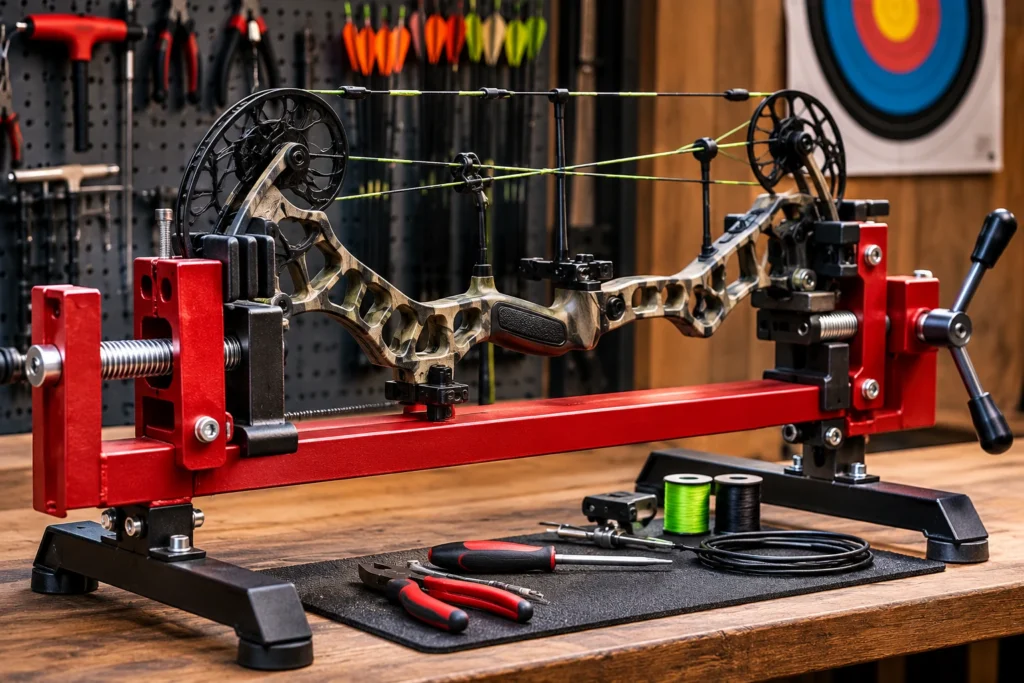
The Work Behind a Well-Maintained Compound Bow
Modern compound archery is about much more than drawing a bow, aiming at a target, and releasing an arrow. Behind every consistent setup is a combination of equipment, adjustments, maintenance, and an understanding of how different components work together.
While sights, stabilizers, releases, and arrows receive plenty of attention, the equipment used to maintain a compound bow is equally important. Proper maintenance helps archers keep their equipment in suitable working condition.
As compound bow designs continue to evolve, archers are also becoming more aware of the importance of proper maintenance. Strings, cables, cams, limbs, and other components all work under mechanical tension. Keeping them in good condition requires suitable equipment and a careful approach.
This is where a compound bow press becomes relevant. It provides a controlled way to reduce tension in a bow so archers can perform certain maintenance and adjustment procedures. From professional workshop setups to compact equipment designed for portability, bow presses have become an important part of the wider archery equipment landscape.
Modern Compound Bows Have Changed the Maintenance Routine
Compound bows use a mechanical system that includes cams, cables, limbs, and a bowstring. These components work together to create an efficient draw cycle and transfer energy when an archer shoots.
This mechanical arrangement also creates specific maintenance requirements. A string can stretch over time, serving can wear, and cables may eventually need attention. Certain adjustments also require archers to reduce tension in the bow before completing the work.
For many archers, these tasks are part of owning and maintaining their equipment. Someone who shoots regularly may need to inspect the string and cables more frequently than someone who only practices occasionally.
Competitive archers and technicians may also work with several bows. As a result, suitable maintenance equipment becomes especially valuable for people who regularly handle different setups.
The growing variety of compound bow designs means that maintenance is not always identical from one model to another. Limb geometry, cam configuration, and manufacturer requirements can influence which pressing method is appropriate.
Why the Equipment Behind Archery Matters
Archery equipment is often discussed in terms of shooting performance, but the condition of that equipment is just as important. A bow with worn cables, damaged serving, or incorrectly positioned components may not behave as expected.
Regular inspection helps archers identify potential issues before they become more serious. It also allows them to check whether the equipment remains in line with its intended design and operating requirements.
A well-maintained setup can give an archer more confidence in the equipment. This does not mean every adjustment automatically improves accuracy. Rather, it means the archer takes proper care of the bow and its components.
Maintenance tools support this process. A bow press, for example, does not directly improve an arrow’s flight. Instead, it makes certain maintenance procedures possible by reducing tension in the bow’s mechanical system.
For archers who regularly work on their own equipment, access to an appropriate press can make selected tasks more convenient. Others may prefer a professional archery shop for string replacement, cable work, and more complex adjustments.
The Role of a Compound Bow Press in Everyday Archery
A compound bow press applies controlled pressure to the bow, reducing tension in the limbs, string, and cables. Once the bow reaches the appropriate pressed position, archers can perform certain maintenance procedures more easily.
These procedures can include string and cable replacement, serving work, peep-sight installation or adjustment, and selected cam-related maintenance. Some draw-length or module adjustments may also require pressing, depending on the bow’s design.
The important point is that a press works with the bow’s mechanical structure. Archers should not treat it as a general-purpose clamp or apply pressure at any convenient location.
Different bow presses use different mechanisms. Some suit fixed workshop environments, while others focus on portability and compact storage. The most suitable arrangement depends on the bow, the maintenance task, and the manufacturer’s pressing requirements.
How Archers Approach Equipment Adjustments
Archers develop different maintenance habits depending on how frequently they shoot and what type of equipment they use. A recreational archer may inspect the bow periodically and arrange professional servicing when necessary.
A competitive shooter may pay closer attention to small changes in string condition, peep alignment, cam timing, and other setup details. These checks help the archer monitor the condition of the equipment over time.
Bowhunters may have another set of priorities. Their equipment needs to remain dependable during travel and outdoor use, where access to a workshop may be limited. A compact maintenance setup can therefore be attractive, provided it suits the bow.
These different requirements explain why the market includes several types of bow presses. A large workshop machine may suit a technician who works on multiple bows each day.
By comparison, a portable bow press may appeal to an archer who values convenient storage and transportation. Neither approach is automatically right for everyone. The equipment should match the actual maintenance requirements rather than simply look more advanced or compact.
What Research Reveals About the Archer and Equipment Relationship
Archery research has examined the physical demands of shooting, including the way the muscles of the bow hand respond during the shooting process. This research helps explain how an archer interacts with the bow during practice and competition.
Equipment maintenance and shooting technique are two different parts of the same wider activity. Both involve understanding the relationship between the archer, the bow, and the equipment.
A 2009 study examined forearm muscle activity in elite and beginner archers. The researchers recorded muscle activity from 20 participants, divided equally into two groups.
One group consisted of 10 elite archers, while the other included 10 beginners. The study highlighted differences in the way the two groups managed their bow-hand muscles.
Elite archers demonstrated greater activation of the extensor digitorum. This finding suggested a different contraction and relaxation strategy compared with beginners.
This research does not evaluate bow presses or prove that a particular maintenance tool improves shooting performance. Its relevance here is broader: archery involves a detailed relationship between the archer, the bow, and the way equipment is handled.
Proper equipment care and an understanding of shooting mechanics both contribute to a more informed approach to the sport.
Research Chart: Elite and Beginner Archer Participation
Participants in the 2009 Archery Muscle-Activity Study
A comparison of the two participant groups included in the research.
10 participants (50%)
10 participants (50%)
20 Archers
The chart represents the study’s participant distribution. It does not show muscle activation percentages, shooting scores, or the performance of any bow press.
Different Press Designs Reflect Different Needs
As compound bow technology has developed, bow presses have also become available in different configurations. Each design offers a different approach to supporting the bow and reducing tension during maintenance.
Traditional workshop presses are generally designed for a dedicated work area. They can provide a stable platform and adjustment options that help technicians service different bows.
However, their size may make them less convenient for someone with limited storage space or a need to maintain equipment away from a workshop.
Portable systems focus on a more compact arrangement. Their smaller format can make transportation and storage easier, which may appeal to hunters, traveling archers, and home users.
However, portability does not mean universal compatibility. The bow manufacturer’s requirements still determine whether a particular pressing method is suitable.
Other designs use different contact arrangements and pressing mechanisms. These differences matter because modern compound bows do not all have identical limb shapes or pressing requirements.
A system that suits one bow may not be appropriate for another.
Portable Equipment Is Changing the Way Archers Think About Maintenance
Convenience has become an important consideration across many areas of archery equipment. Accessories that are easier to transport, store, and set up can attract people who do not have a dedicated workshop.
The same thinking applies to maintenance equipment. A portable bow press can offer a compact alternative to a large fixed system when its design is compatible with the bow and the intended task.
Archers who need a compact maintenance option can explore this compound bow press for more information about its design and available configurations.
For an archer who travels frequently, the ability to carry selected maintenance equipment can be useful. A hunting setup may need transportation between locations, while competitive archers often move their equipment between practice facilities and events.
At home, a compact system may also be easier to store alongside other archery accessories. Instead of dedicating a large amount of space to a permanent machine, an archer can consider a smaller solution designed around occasional maintenance needs.
These practical advantages help explain the interest in portable bow presses. The value is not simply that the equipment is smaller. It is that the maintenance setup can become more flexible while still meeting the need for correct positioning and compatibility.
Comparing Portable and Workshop Bow Presses
Both types of equipment serve the same broad maintenance purpose, but their practical characteristics can be quite different. Understanding these differences helps explain why archers may prefer one setup over another.
| Feature | Portable Bow Press | Workshop Bow Press |
|---|---|---|
| Design | Compact and designed for transportation | Larger and designed for a fixed workspace |
| Storage | Requires less storage space | Usually requires dedicated space |
| Transportation | Convenient for travel when permitted for the bow | Generally less convenient to transport |
| Typical environment | Home, travel, and selected field-maintenance situations | Archery shops and dedicated workspaces |
| Adjustment options | Depend on the individual design | Often offers a wider range of workshop adjustments |
| Main consideration | Portability and bow compatibility | Workspace, stability, and maintenance frequency |
The comparison shows why there is no single arrangement that suits every archer. A portable setup may appeal because of its size and convenience, while a workshop press may work better for regular professional servicing.
Compatibility Has Become an Important Part of Bow Ownership
One of the biggest considerations when working with modern compound bows is compatibility. Manufacturers may specify particular pressing methods for their equipment, especially when a bow has a specific limb design or geometry.
Some modern bows use past-parallel or highly angled limb configurations. These designs can require specific contact points and approved pressing systems.
A conventional method that works with an older bow may not suit a newer model. This is why the term bow press for compound bows does not mean that every press works with every compound bow.
The correct system depends on the actual bow model and the manufacturer’s instructions. Before using any press, an archer should check the bow manual and confirm whether the selected pressing method is approved.
If an adapter or additional component is required, the archer should use the correct one for that setup. These checks are particularly important with portable systems.
A compact design can be convenient, but it still needs to support the bow correctly and follow the manufacturer’s requirements.
Maintenance Is About More Than Replacing Strings
String and cable replacement are among the most familiar reasons for using a press, but bow maintenance involves several other details. Serving condition, peep-sight position, cam timing, and selected accessory adjustments can all require attention during the life of a compound bow.
These details are connected. A change in string or cable condition can affect the way components sit and interact.
After maintenance, an archer may need to check the overall setup and confirm that everything sits in the correct position.
For this reason, the press is only one part of the maintenance process. The person performing the work also needs to understand the bow’s configuration and the procedure being carried out.
Some adjustments do not require pressing, while others need a suitable press. The correct approach depends on the specific bow and the manufacturer’s recommendations rather than a general assumption about all compound bows.
Why DIY Bow Press Ideas Need Careful Consideration
Archery enthusiasts often enjoy working on their own equipment. From building custom accessories to adjusting stabilizers and maintaining strings, hands-on involvement is part of the experience for many people.
This interest can also lead to DIY bow press projects. However, a press must handle the mechanical forces created by a compound bow.
A homemade design that lacks proper engineering can apply pressure in the wrong places, shift during use, or fail under load. These risks make a DIY bow press very different from a simple storage rack or accessory holder.
Its construction, materials, contact points, and adjustment mechanism all matter. For most archers, a purpose-designed commercial press that suits their bow offers a more predictable option.
Archers should leave complex maintenance to a qualified technician when they feel uncertain about the correct procedure or equipment.
When Professional Maintenance Still Makes Sense
Owning a press does not mean every maintenance task should be completed independently. Professional archery technicians work with different bow designs and have access to suitable workshop equipment and experience.
For someone unfamiliar with pressing requirements, a professional shop can help identify the correct method for a particular bow. This is especially useful when dealing with unusual limb configurations, damaged strings, cable problems, or mechanical issues.
Even experienced archers should avoid pressing a bow when visible damage is present or when the correct contact points remain uncertain.
A press supports appropriate maintenance. It should never force a damaged component into position.
Knowing when to work independently and when to seek professional help is an important part of responsible equipment ownership.
A More Flexible Approach to Compound Bow Maintenance
Archery continues to develop, and the equipment used around the sport is changing with it. Modern compound bows offer sophisticated mechanical systems, while maintenance equipment comes in different formats for home users, traveling archers, and professional technicians.
For some archers, a fixed workshop setup makes the most sense. For others, portability and convenient storage matter more.
A compact press can fit naturally into a smaller maintenance setup, provided it suits the bow and the task being performed.
The wider conversation is not simply about choosing between large and small equipment. It is about understanding the relationship between bow design, maintenance requirements, and the tools used to keep equipment in proper condition.
A thoughtful approach to maintenance helps archers make better decisions about their equipment. It also encourages them to follow manufacturer instructions, inspect components regularly, and recognize when professional assistance is necessary.
Final Thoughts
The equipment behind compound archery plays an important role long before an arrow reaches the target. Strings, cables, cams, limbs, and other components need appropriate care, and the right maintenance tools can make selected procedures more manageable.
A compound bow press is an important part of that process. Whether an archer works with a fixed workshop system or prefers a portable bow press, compatibility and correct use should remain the priority.
As archery equipment continues to evolve, flexible maintenance solutions will remain relevant to people who want to look after their bows at home, while traveling, or in a dedicated workshop.
The best approach respects the design of the bow, supports its maintenance requirements, and keeps safe equipment handling at the center of every adjustment.