

In archery, the way a bow sits in the hand is an important part of a consistent shooting routine. The bow needs support throughout the draw, aim and release, but holding it too tightly can introduce unnecessary movement. This is one reason many compound bow archers use a wrist sling as part of their equipment setup.
A wrist sling connects to the bow and fits around the archer’s bow hand wrist. Its main purpose is to help retain the bow after the shot, allowing the archer to maintain a relaxed bow-hand position without needing to grip the handle tightly. It is a small accessory, but its fit, adjustment and attachment can influence how comfortable the bow feels during practice and shooting.
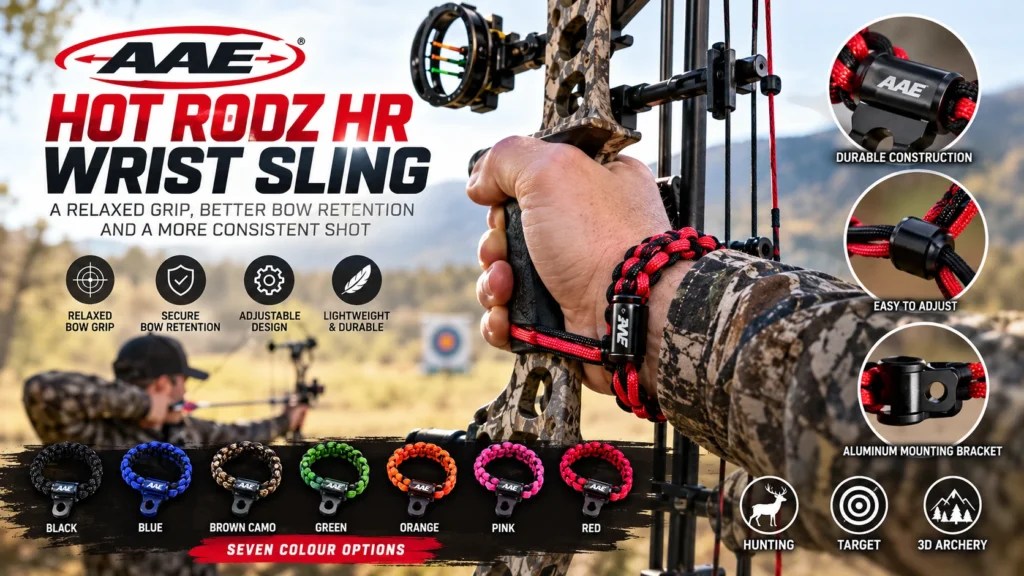
The AAE Hot Rodz HR Wrist Sling is an adjustable archery wrist sling from Arizona Archery Enterprises. It is described by the manufacturer as durable and easy to adjust, and it is available in several colour options. For archers comparing bow accessories, its construction and adjustment features make it a product worth considering.
A More Relaxed Approach to Holding a Compound Bow
A compound bow grip is designed to provide a consistent contact point for the bow hand. During the shot, however, the archer generally aims to avoid squeezing the handle. Excessive pressure from the fingers or palm can introduce unwanted torque and affect the way the bow moves after release.
This does not mean the bow hand has no role in supporting the equipment. The hand must maintain a repeatable position, with pressure applied consistently through the intended contact area. The goal is to avoid unnecessary gripping rather than allowing the bow to move unpredictably.
A wrist sling provides an additional point of retention. When the arrow is released and the bow moves forward naturally, the sling helps prevent it from falling out of the archer’s hand. This can make it easier to practise a relaxed grip without relying on a tight hold around the bow handle.
For this reason, a bow wrist strap is not simply a decorative accessory. It has a practical role in the relationship between the archer’s hand, the bow grip and the movement of the bow after release.
How a Bow Sling Supports Bow-Hand Technique
A bow sling is used to help retain the bow while the archer maintains a controlled hand position. Different sling designs connect to the bow and the archer in different ways, but their purpose is generally related to preventing the bow from falling after a shot.
With a wrist sling, one part attaches to the bow, while the loop fits around the wrist of the bow hand. The fit should allow the archer to hold the bow naturally without creating unnecessary pressure or restricting movement.
When the bow is released, the sling provides a connection between the bow and the wrist. This can reduce the need to catch the bow with the fingers immediately after the shot.
Archers should remember that a wrist sling does not correct poor shooting form by itself. It cannot replace a consistent bow-hand position, proper alignment or regular practice. Its role is to support the equipment setup while the archer develops repeatable technique.
Bow Grip, Hand Pressure and Shooting Consistency
Bow grip technique is an important consideration for both target and hunting archers. A repeatable hand position helps the archer apply pressure in a consistent way. Changes in hand placement or unnecessary squeezing can affect how the bow is supported during the shot.
Many archery coaching approaches recommend a relaxed bow hand. Rather than wrapping the fingers tightly around the grip, the archer establishes a consistent contact point and allows the bow to respond naturally during release. A wrist sling can provide reassurance that the bow will remain connected to the archer after the arrow leaves the string.
It is important to distinguish between a relaxed grip and an uncontrolled grip. The archer should still maintain a stable bow-hand position and follow the technique recommended by their coach or equipment manufacturer.
Why Excessive Bow-Hand Pressure Matters
When an archer squeezes the bow handle unevenly, the pressure can introduce sideways movement or torque. This may make it harder to repeat the same bow-hand position from one shot to the next.
A wrist sling can help reduce the concern that the bow will fall when the fingers are relaxed. However, it should not be treated as a device that automatically improves accuracy. The outcome still depends on technique, equipment setup, bow balance and the archer’s consistency.
Finding a Comfortable Wrist Position
The sling should sit comfortably around the bow hand wrist. It should not be so tight that it restricts circulation or movement, and it should not be so loose that the bow can move excessively before the sling provides retention.
Archers should check the fit while holding the bow in their normal shooting position. The wrist should remain comfortable, and the sling should not interfere with the grip, release routine or other equipment.
What Archery Research Says About the Bow Hand
Research into archery technique has examined how the muscles of the bow arm behave during shooting. A study published in the Journal of Science and Medicine in Sport compared forearm muscle activation patterns in 10 elite archers and 10 beginner archers.
The researchers examined the activity of forearm muscles involved in finger flexion and extension. The study reported that elite archers showed greater activation of the extensor muscle group, a pattern consistent with avoiding excessive gripping of the bow handle.
This research focused on recurve archery and bow-arm muscle activity. It did not test the AAE Hot Rodz HR Wrist Sling or establish that using a wrist sling directly improves accuracy. Its value here is that it provides scientific context for understanding why relaxed bow-hand technique is discussed in archery coaching.
Research Snapshot: Bow-Hand Muscle Activity
| Study group | Participants | Study observation |
|---|---|---|
| Elite archers | 10 | Greater activation of the forearm extensor muscle group was reported. |
| Beginner archers | 10 | Different forearm muscle contraction patterns were observed. |
Sample-size comparison
Elite archers:
Beginner archers:
Source: Muscular activation patterns of the bow arm in recurve archery, Journal of Science and Medicine in Sport, 2009. Read the research abstract.
The study offers useful background for understanding bow-hand technique, but the sample size is limited and the findings should not be interpreted as a direct comparison of wrist sling products. A wrist sling is one possible equipment aid for bow retention; it does not replace learning a consistent shooting technique.
Where the AAE Hot Rodz HR Wrist Sling Fits into an Archer’s Setup
For archers looking for an adjustable wrist sling, the AAE Hot Rodz HR Wrist Sling is designed to provide a practical connection between the bow and the archer’s bow hand. Its adjustable construction makes it possible to adapt the sling to the user’s preferred fit.
The product belongs to AAE’s Hot Rodz line. The manufacturer describes it as durable and easy to adjust. It is offered in seven colours: black, blue, brown camo, green, orange, pink and red.
These details are relevant when comparing wrist sling options because archers may have different preferences for appearance, adjustment and equipment coordination. A wrist sling should be selected according to fit and compatibility rather than colour alone.
Adjustable Design for Individual Fit
One of the main features of the AAE HR Wrist Sling is its adjustable construction. An adjustable wrist sling allows the archer to position the loop according to their hand and wrist preferences.
Fit is important because archers do not all have the same wrist size or shooting routine. A sling that feels comfortable to one person may require adjustment for another. The aim is to establish a secure but comfortable connection without restricting the normal movement of the bow hand.
Durable Construction and Mounting
The HR Wrist Sling is described as a durable design. Product listings also identify an aluminum mounting bracket. The bracket is the attachment component that connects the sling to the bow setup.
Before installation, archers should check that the mounting arrangement is suitable for their particular bow and follow the relevant equipment instructions. The sling should not interfere with the bow grip, stabilizer, accessories or other mounting hardware.
Seven Colour Options
The manufacturer’s product information lists seven colour choices for the HR Wrist Sling:
- Black
- Blue
- Brown Camo
- Green
- Orange
- Pink
- Red
These options give archers a choice when matching the sling with their bow, stabilizer or other accessories. Colour is a personal preference, while correct fit and attachment remain the more important selection factors.
Wrist Sling Compared with Other Archery Sling Types
The terms bow sling, wrist sling and finger sling are sometimes used interchangeably in casual archery discussions. However, these designs can have different attachment points and fitting methods. Understanding the difference helps archers choose an accessory that suits their equipment and shooting preferences.
| Sling Type | Connection | General Purpose | Consideration |
|---|---|---|---|
| Wrist Sling | Bow and bow-hand wrist | Helps retain the bow after release | Fit and wrist comfort are important. |
| Finger Sling | Bow and fingers | Helps retain the bow through a finger connection | Requires a suitable finger fit. |
| Bow Sling | Varies by design | May describe different bow-retention or carrying accessories | Check the specific product design. |
| Bow Lanyard | Varies by product | Provides a tether or retention connection | Not every lanyard is intended for shooting use. |
The AAE Hot Rodz HR is a wrist sling, so its main purpose should be understood in that context. It is not a finger sling or a general-purpose carrying strap. Archers should choose the type that matches their shooting style and the manufacturer’s intended use.
Wrist Sling vs Finger Sling: Which One Should You Consider?
A wrist sling and a finger sling both help retain a bow, but they connect to the archer differently. A wrist sling fits around the bow hand wrist, while a finger sling uses a loop or connection around the fingers.
Some archers prefer a wrist sling because they like the feeling of a connection around the wrist. Others prefer a finger sling because of its different contact and release characteristics. There is no single option that is best for every archer.
When comparing the two, consider the following:
- Comfort: Choose the design that feels natural during your shooting routine.
- Fit: Check that the sling stays correctly positioned without restricting movement.
- Bow compatibility: Confirm that the attachment method works with your bow setup.
- Technique: Consider the sling type recommended by your coach or discipline.
- Adjustment: Make sure the length and fit can be set appropriately.
Trying the options under controlled practice conditions can help identify which style feels most suitable. A change in sling design should be introduced gradually so the archer can become familiar with its fit and behaviour.
Using a Bow Wrist Strap in Different Archery Activities
Wrist slings are used in different archery settings, including target practice, compound bow shooting and some hunting setups. The general purpose remains bow retention, although the archer’s equipment arrangement and shooting conditions may differ.
Target Archery
Target archers often focus on repeatable positioning, consistent alignment and controlled release. A wrist sling can help retain the bow while the archer works on maintaining a relaxed bow hand. It should be adjusted so it does not interfere with the normal shooting sequence.
Compound Bow Practice
Compound bow users may include a wrist sling among their bow accessories alongside a stabilizer, sight, arrow rest and release aid. Each accessory has a different purpose. A sling supports retention, while the other components contribute to aiming, arrow support or release operation.
Bowhunting Equipment
For hunting archers, equipment needs to be practical and comfortable in the conditions where the bow is used. A wrist sling can be part of the bow setup, but it should not snag on clothing, interfere with movement or create noise during handling.
Before using any sling in the field, check its fit and attachment during practice. The archer should be familiar with how the sling behaves when raising, aiming and lowering the bow.
What to Check Before Choosing an Archery Wrist Sling
There are several practical considerations when comparing a bow wrist strap. Product descriptions can explain the construction and adjustment features, but the archer should also consider how the accessory fits their equipment.
- Adjustment range: Check whether the sling can be adjusted to a comfortable wrist position.
- Mounting arrangement: Confirm that the attachment hardware is appropriate for the bow.
- Material and construction: Review the listed materials and the quality of the attachment components.
- Comfort: Avoid a fit that is excessively tight or restricts wrist movement.
- Compatibility: Make sure the sling works with the bow and its existing accessories.
- Intended use: Confirm whether the product is designed for shooting retention or another purpose.
- Colour preference: Select an option that suits your equipment without allowing appearance to outweigh fit.
These checks help prevent common selection mistakes. An adjustable design is useful, but adjustment alone does not guarantee a suitable fit for every archer.
Common Wrist Sling Setup Mistakes to Avoid
Even a simple bow accessory should be installed and adjusted carefully. A poor fit can become distracting and may interfere with the archer’s normal shooting routine.
Making the Sling Too Tight
A wrist sling should not restrict normal wrist movement or create discomfort. If it feels tight when the bow is raised, adjust it before shooting.
Leaving Excessive Slack
If the sling is excessively loose, the bow may move farther than expected before the strap provides retention. Check the fit under controlled conditions and adjust it according to the product instructions.
Ignoring the Mounting Point
The attachment point should be appropriate for the bow and should not interfere with other components. Check the mounting hardware and follow the bow manufacturer’s guidance when installing accessories.
Expecting the Sling to Fix Shooting Form
A wrist sling can support bow retention, but it cannot correct inconsistent hand placement, poor alignment or an unstable shooting routine. Technique still needs to be developed through instruction and practice.
Frequently Asked Questions
What is the AAE Hot Rodz HR Wrist Sling?
It is an adjustable wrist sling from Arizona Archery Enterprises’ Hot Rodz line. It is designed to help retain the bow through a connection between the bow and the archer’s bow-hand wrist.
Is the AAE Hot Rodz HR Wrist Sling adjustable?
Yes. AAE describes the HR Wrist Sling as adjustable and easy to adjust, allowing the archer to set a preferred fit.
What colours are available?
The manufacturer’s product information lists black, blue, brown camo, green, orange, pink and red. Actual availability may vary by retailer.
Does a wrist sling improve archery accuracy?
A wrist sling does not automatically improve accuracy. It can help retain the bow after release and may make it easier for an archer to practise a relaxed bow-hand position. Accuracy still depends on technique, equipment setup and consistent practice.
What is the difference between a bow sling and a wrist sling?
The terms can describe different designs. A wrist sling specifically connects the bow to the archer’s wrist, while bow sling may be used more broadly for different bow-retention or carrying accessories. Always check the product’s intended design.
Can a wrist sling be used with a compound bow?
Wrist slings are commonly used as compound bow accessories. However, the mounting arrangement must be compatible with the particular bow and should not interfere with other equipment.
How tight should a bow wrist strap be?
It should be comfortable and allow normal wrist movement. It should not be so tight that it restricts movement or so loose that the bow moves excessively before the sling provides retention.
Final Thoughts
A wrist sling is a small but useful part of an archer’s equipment setup. It helps retain the bow after release and can support a relaxed bow-hand approach without replacing the need for consistent technique. Fit, adjustment and correct mounting all matter when selecting this type of accessory.
The AAE Hot Rodz HR Wrist Sling brings together an adjustable design, durable construction and a choice of seven colours. Its straightforward purpose makes it relevant for archers who want a wrist-based bow-retention accessory as part of their compound bow setup.
When choosing a bow wrist strap, focus on comfort, compatibility and the way it works with your shooting routine. A suitable sling should support your equipment setup without becoming a distraction during practice or on the range.