

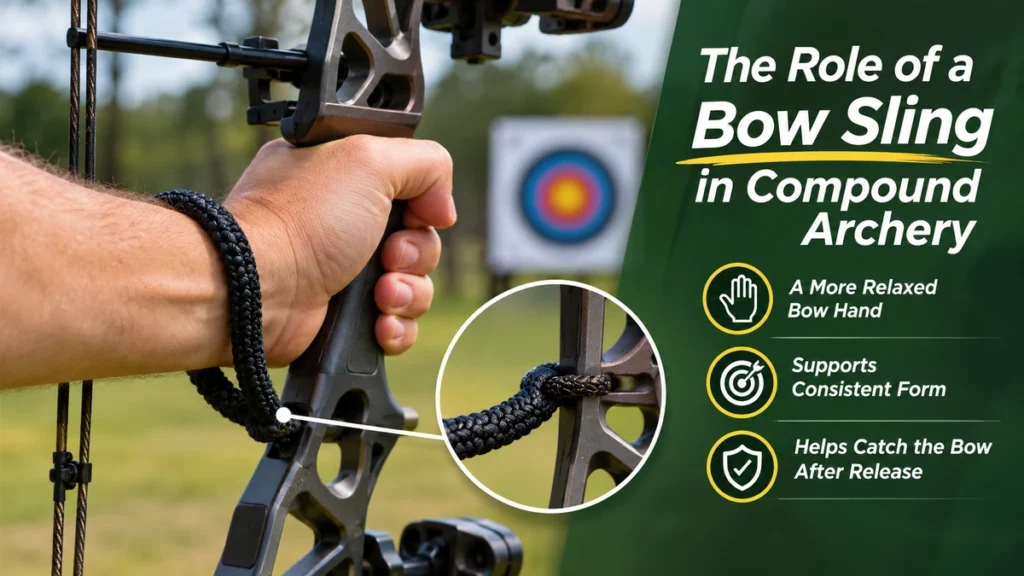
The Small Detail That Makes a Difference in Compound Bow Shooting
In compound archery, a consistent shot is rarely the result of one piece of equipment or one movement. It comes from several small details working together: a stable stance, repeatable hand placement, controlled release, and a bow hand that does not interfere with the shot. Some of these details are easy to notice, while others receive very little attention. A bow sling is one of those often-overlooked accessories.
At first glance, a wrist sling may look like a simple strap attached to the bow or wrapped around the archer’s wrist. Its purpose, however, is connected to an important part of shooting technique. It helps prevent the bow from falling after release, allowing the archer to maintain a more relaxed bow hand instead of holding the grip tightly out of fear of dropping the equipment.
This is particularly relevant in compound archery, where repeatable bow-hand placement and controlled follow-through are important parts of a consistent shooting routine. A bow wrist sling is not a shortcut to better accuracy, nor can it correct inconsistent shooting form. It simply supports a technique in which the archer can focus on the shot without unnecessarily gripping the bow.
Why a Relaxed Bow Hand Matters
One of the common challenges for developing archers is learning how much pressure to apply through the bow hand. A natural reaction is to close the fingers around the grip, especially when the archer is concerned about the bow moving forward after the shot.
However, gripping the bow too tightly can introduce unwanted movement. Pressure from the fingers may affect how the bow sits in the hand and can create inconsistent contact from one shot to another. Even when the archer’s stance and draw are repeatable, a changing grip can introduce another variable into the shooting process.
Archery coaching resources commonly recommend a relaxed bow hand and explain that a sling can prevent the bow from falling when the archer does not actively hold it during release. The aim is not to let the bow hang loosely throughout the entire shooting process. Instead, the archer maintains the appropriate hand position and allows the sling to catch the bow as it moves forward after release.
A research paper published in the Journal of Science and Medicine in Sport examined forearm muscle activation in 10 elite and 10 beginner recurve archers. The researchers observed differences in the muscle-activation strategies used by the two groups. Elite archers showed greater activation of the finger extensor muscle, a pattern associated with avoiding a tight grip on the bow handle.
The study did not test wrist slings or prove that using one automatically improves accuracy. Its value here is that it helps explain why bow-hand control and avoiding unnecessary gripping deserve attention in archery technique.
Research Chart: Elite and Beginner Archer Study Groups
The following research data presents the participant composition of the study. It shows the number of archers included in each group, rather than claiming that one group achieved better accuracy or that a wrist sling improved shooting performance.
| Research Group | Number of Participants |
|---|---|
| Elite Archers | 10 |
| Beginner Archers | 10 |
| Total Participants | 20 |
Research source: Muscular activation patterns of the bow arm in recurve archery, Journal of Science and Medicine in Sport, 2009.
Chart placement: If you create a graphical version of this data, place it directly after the research paragraph and before the next section, “The Bow Sling’s Role During the Shot.”
The Bow Sling’s Role During the Shot
A sling for bow equipment is designed to provide a safety connection between the archer and the bow. During the shot, the bow can move forward as part of its natural reaction. Without a sling, an archer may instinctively close the fingers around the grip to keep the bow from falling.
A properly adjusted sling provides another option. It catches the bow after release while allowing the archer to keep the bow hand relaxed. This can make it easier to practise a repeatable hand position and follow-through without deliberately squeezing the grip.
The distinction is important: a sling should not be used to pull the bow into position or hold it tightly against the hand. If it is adjusted too tightly, it may interfere with the bow hand or the bow’s natural movement. The equipment should support the archer’s technique rather than create another source of pressure.
For compound bow users, this is one reason a bow sling can be a useful part of an everyday setup. It provides a practical connection between the wrist and the bow while the archer concentrates on aiming, release execution, and follow-through.
What Happens Between Release and Follow-Through?
The shot does not end at the exact moment the arrow leaves the string. The archer still needs to maintain the intended posture and avoid introducing unnecessary movement immediately after release.
During follow-through, the bow arm continues its forward direction while the archer maintains attention on the target. If the bow hand suddenly tightens or the fingers close around the grip, that movement can become an unwanted part of the shot.
A wrist sling helps address one particular concern during this stage: keeping the bow from falling. It does not control the archer’s arm, correct the release, or guarantee a clean follow-through. Those elements still depend on practice and technique.
This is where the archery wrist sling becomes more than an accessory for carrying or holding equipment. It can support a shooting routine in which the archer does not need to grip the bow simply to keep it in hand.
Wrist Sling and Finger Sling: Two Different Approaches
Archers use different sling designs depending on their bow setup, shooting style, and personal preference. Wrist slings and finger slings share a general purpose, but they connect to the archer in different ways.
A wrist sling normally attaches around the bow hand’s wrist and connects to the bow. A finger sling is generally positioned between the thumb and index finger, forming a loop that catches the bow after release.
Neither design should be treated as a universal solution for every archer. The right option depends on comfort, compatibility, and the shooting technique being practised.
| Feature | Wrist Sling | Finger Sling |
|---|---|---|
| Connection | Attaches around the wrist and connects to the bow. | Usually loops between the thumb and index finger. |
| Main Purpose | Helps prevent the bow from falling after release. | Helps catch the bow while allowing a relaxed bow hand. |
| Common Use | Frequently used with compound bow setups. | Commonly associated with target archery and recurve setups. |
| Adjustment | Wrist fit and connection length are important. | Loop size and finger placement are important. |
| Comfort Consideration | Should sit comfortably without restricting wrist movement. | Should not pinch or interfere with finger movement. |
| Technique Consideration | Must not pull the bow hand out of position. | Must allow the bow to move naturally after release. |
The table highlights the general differences rather than suggesting that one style is automatically more accurate. A sling should fit the archer’s equipment and shooting method. The most useful design is one that stays comfortable, does not interfere with the grip, and performs its catching function without being excessively tight.
Why Compound Bow Archers Pay Attention to Sling Fit
Compound bows are often configured with accessories such as sights, stabilizers, arrow rests, and release aids. Each accessory has a particular role, and the archer needs to become familiar with how the complete setup feels during a shot.
A compound bow wrist sling adds another contact point to this arrangement. If the wrist loop is uncomfortable, too restrictive, or poorly positioned, it can become distracting. If the connection is too tight, it may interfere with the bow’s movement or encourage the archer to apply unnecessary pressure.
That is why fit matters more than simply having a sling attached. The wrist strap should feel secure without restricting normal movement. The connection should be positioned so that it does not interfere with the bow hand’s placement on the grip.
Archers should also consider the design of their particular bow and any existing attachment points. Not every bow has the same configuration, so checking compatibility before choosing a compound bow sling is a sensible step.
The Difference Between Holding the Bow and Letting the Sling Catch It
A common misunderstanding is that a bow sling should hold the bow firmly against the hand throughout the shot. That is not its intended role.
The sling is there to catch the bow when it begins to move forward after release. It should not replace correct hand placement or become a device that forces the bow into a particular position.
This distinction also explains why a tight bow strap is not necessarily better. Excessive tension may make the archer feel that the bow is secure, but it can also restrict movement and interfere with the natural response of the equipment.
A useful way to think about it is that the bow hand provides the appropriate contact and pressure, while the sling provides a safety connection. Both have separate jobs. When the archer understands that difference, the equipment becomes easier to use as part of a consistent routine.
Materials, Adjustment, and Everyday Comfort
Bow slings are available in different materials and construction styles. Some use cord-based designs, while others use webbing, synthetic materials, or padded sections. The best choice is not necessarily the one with the most complicated construction. Comfort, secure attachment, and practical adjustment are more important.
A few details are worth considering when comparing different bow slings:
- Wrist comfort: The strap should sit comfortably without digging into the skin.
- Adjustment range: The archer should be able to achieve a secure fit without making the sling excessively tight.
- Connection security: The attachment should remain secure during normal shooting practice.
- Material feel: The material should be comfortable against the wrist and suitable for regular use.
- Bow compatibility: The design should work with the bow’s attachment arrangement and should not obstruct other accessories.
These considerations apply whether an archer is looking for a basic bow wrist strap or a more specialised compound bow wrist sling. A practical design should support the shooting routine without demanding constant adjustment.
Small Equipment Details Can Support Consistent Habits
Archery consistency is built through repetition. The archer works to establish the same stance, draw, anchor, aiming process, release, and follow-through. Equipment can support those habits, but it cannot replace them.
A bow sling is a good example of an accessory with a relatively simple job that connects to a larger part of shooting technique. By helping prevent the bow from falling after release, it can reduce the need to hold the grip tightly for security.
That does not mean every archer will immediately notice a change in performance. Some may need time to become comfortable with the movement of the bow after release. Others may need to adjust the sling to find a fit that does not interfere with their hand position.
The important point is to treat the sling as part of the overall setup. It should make the shooting process more comfortable and practical, not add tension or distract the archer.
When a Bow Sling Becomes Part of Your Regular Setup
For someone who practises regularly, small accessories often become part of a familiar routine. Once the archer has found a comfortable fit, the sling can remain in place as part of the bow setup.
Before shooting, it is worth checking that the wrist loop is sitting correctly and that the connection is secure. The archer should also make sure that the strap does not interfere with the grip, release aid, or other equipment.
During practice, attention should remain on proper shooting form. The sling should catch the bow naturally rather than being used to pull or hold it in place. If it causes discomfort or changes the way the bow hand contacts the grip, its adjustment should be reviewed.
This approach applies to different types of bow slings, including adjustable wrist designs and other archery slings. A comfortable, correctly fitted accessory is more useful than one that simply looks secure.
Final Thoughts
A bow sling may be a small part of a compound bow setup, but its purpose connects to an important aspect of archery: maintaining a relaxed bow hand while allowing the equipment to move naturally after release.
It does not guarantee better scores or replace good technique. Instead, it helps solve a practical problem by preventing the bow from falling when the archer is not gripping it tightly. That can support a more comfortable shooting routine and help the archer focus on repeatable form.
Whether someone calls it a bow wrist sling, compound bow sling, wrist sling bow, or bow strap, the central consideration remains the same. It should fit comfortably, work with the bow, and support the archer without interfering with the shot.
For compound archers, that small detail can make the overall setup feel more complete.