
Understanding the Recurve Hunting Bow and Its Place in Traditional Archery
A recurve hunting bow represents one of the most recognizable designs in traditional archery. Its distinctive curved limb tips, straightforward construction, and connection to established shooting traditions make it an interesting choice for archery enthusiasts. While modern equipment continues to introduce advanced materials and mechanical systems, the recurve bow maintains its appeal through simplicity, craftsmanship, and the skills required to use it consistently.
For people exploring Bogenschießen or traditional archery, understanding the different types of bows is an important first step. Recurve bows, longbows, and compound bows each have their own construction, handling characteristics, and intended applications. Choosing between them requires more than looking at appearance or advertised specifications. Factors such as draw weight, bow length, personal comfort, experience, and equipment quality all deserve attention.
Interest in the Recurvebogen also extends beyond recreational target shooting. Traditional archery enthusiasts appreciate its direct shooting experience and relatively uncomplicated design. However, anyone considering a bow for hunting-related purposes must understand that equipment suitability and legal permission are separate matters. In Germany, hunting regulations are particularly important, and owning or practising with a bow does not automatically mean it can legally be used for hunting.
What Makes a Recurve Bow Different?
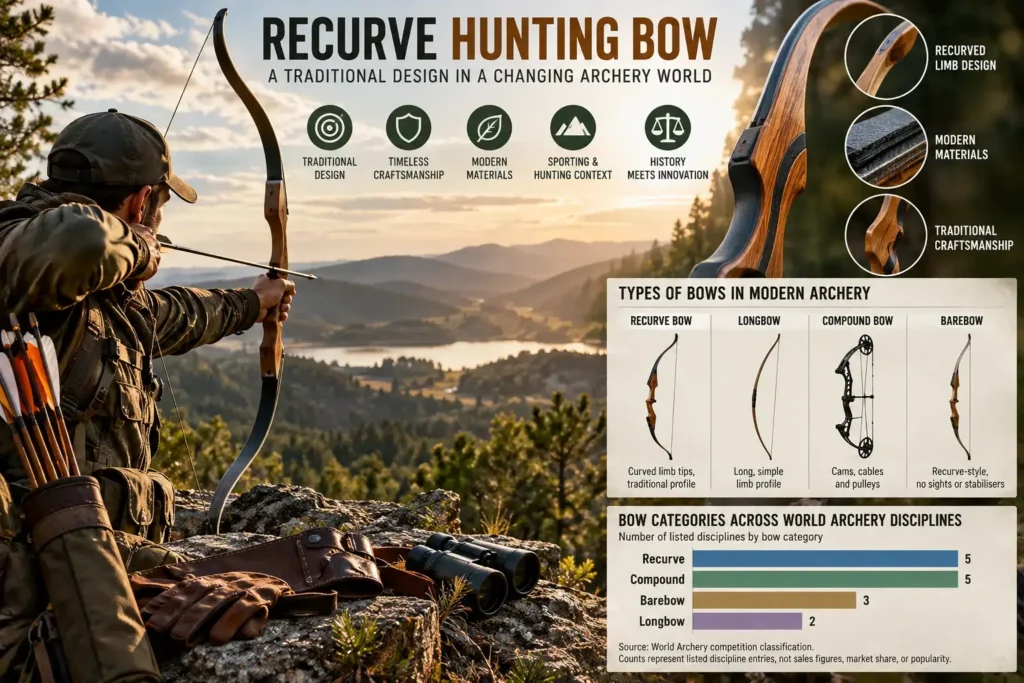
A recurve bow is identified by the shape of its limbs. Unlike a simple longbow, the tips of a recurve bow curve away from the archer when the bow is unstrung. This distinctive construction influences how the limbs store and release energy during the shooting process.
A traditional Recurve Bow generally consists of a riser, two limbs, and a bowstring. Depending on the model, it may be manufactured as one solid piece or designed as a takedown bow with removable limbs. Materials can include wood, fibreglass, aluminium, and combinations of modern composite materials.
The design is available in several configurations. Some models focus on traditional appearance and straightforward construction, while others incorporate modern risers, interchangeable limbs, and adjustment options. This variety allows archers to explore different styles without assuming that every recurve bow offers the same shooting experience.
One of the main attractions of this design is its relatively direct relationship between the archer and the equipment. Unlike a compound bow, a traditional recurve does not rely on a cam-and-cable system or mechanical let-off. The archer must manage the bow’s drawing weight throughout the shooting process.
Why Traditional Archery Continues to Attract Enthusiasts
Traditionelles Bogenschießen has a particular appeal because it places considerable emphasis on technique, consistency, and concentration. Instead of depending entirely on mechanical assistance, traditional archers develop their skills through repeated practice and familiarity with their equipment.
Many enthusiasts appreciate the simple appearance of wooden bows, the feel of a traditional grip, and the challenge of developing a consistent shooting routine. Others enjoy exploring the craftsmanship behind different bow designs, including the selection of materials, limb construction, and traditional manufacturing methods.
Another reason for its popularity is the variety of equipment available. A beginner may start with a relatively straightforward recurve bow, while a more experienced archer might explore specialised risers, interchangeable limbs, and different configurations. This makes traditional archery an activity in which equipment knowledge can develop alongside practical skills.
Recurve Bow vs. Longbow vs. Compound Bow
Understanding the main Bogenarten helps buyers make a more informed decision. Although these designs share the basic principle of using stored limb energy to propel an arrow, their construction and handling characteristics differ.
| Bow Type | General Design | Common Appeal |
|---|---|---|
| Recurve Bow | Curved limb tips with traditional or modern construction | Traditional shooting, target practice, and archery development |
| Longbow | Longer, relatively simple limb design | Historical archery and traditional shooting styles |
| Compound Bow | Mechanical system using cams and cables | Modern equipment configurations and adjustable shooting characteristics |
A recurve bow can offer a relatively compact traditional configuration compared with many longbows. Some archers also find particular recurve designs comfortable for different shooting positions. However, the actual experience depends on the model, its dimensions, and the individual’s technique.
Longbows are appreciated for their traditional appearance and smooth shooting characteristics. Their longer limbs can influence how they feel during handling, particularly when space is limited. Compound bows, meanwhile, use mechanical components that create a different drawing and holding experience.
There is no universal winner in this comparison. The right option depends on the archer’s preferences, intended activity, experience, and the equipment rules that apply in their location.
Choosing the Correct Draw Weight
Draw weight is one of the most important specifications to understand before selecting a Recurve Hunting Bow. It describes the force required to draw the bow to its specified measurement. A higher draw weight requires greater physical effort, while a lower draw weight may be more manageable for someone developing their technique.
A common mistake is choosing a bow based on strength alone. Being physically capable of pulling a heavy bow does not necessarily mean that the archer can maintain consistent form throughout repeated practice sessions. A bow that feels manageable during the first few shots may become difficult to control when fatigue develops.
It is therefore important to prioritise comfortable handling and repeatable technique rather than selecting the highest available draw weight. Beginners should seek advice from a qualified archery instructor or specialist retailer before choosing their first bow.
Another important detail is the manufacturer’s measurement standard. Draw weight is normally specified at a particular draw length. If an archer draws the bow to a different length, the actual force can also differ. This is why comparing two models only by their printed draw-weight numbers may not provide a complete picture.
How Bow Length Affects Comfort and Handling
Bow length is another specification that deserves attention. Recurve bows are available in different overall lengths, and the correct option depends on the archer’s physical measurements and draw length.
A bow that is too short for an individual’s draw can feel uncomfortable and may not perform as expected. On the other hand, a longer model may be easier for some archers to handle but less convenient when storage space or portability is important.
Traditional recurve bows are often available in several standard lengths, including configurations around 58, 60, and 62 inches. These measurements should be treated as product options rather than universal recommendations. The appropriate length depends on the manufacturer’s specifications and the user’s measurements.
Before purchasing, it is useful to compare the bow’s recommended draw-length range with personal requirements. Trying different models at an archery shop or supervised shooting facility can help identify a comfortable fit.
One-Piece and Takedown Recurve Bows
One of the most noticeable differences between traditional recurve models is whether the bow is manufactured as one piece or designed for takedown assembly.
One-Piece Recurve Bows
A one-piece recurve bow has a fixed construction in which the main body and limbs form a single unit. This design is often appreciated for its traditional appearance, straightforward structure, and distinctive craftsmanship.
Because the limbs are not designed to be removed for ordinary transport or adjustment, buyers should pay attention to the bow’s overall dimensions and storage requirements. It is also important to select a model that matches the archer’s measurements and intended use from the beginning.
Takedown Recurve Bows
A takedown recurve bow is constructed with a separate riser and removable limbs. This arrangement can make transportation and storage easier, particularly for people who travel with their archery equipment.
Another advantage is the ability to replace compatible limbs when an adjustment or repair is required. Some models also offer different limb options, allowing the archer to explore alternative configurations when appropriate.
However, compatibility should never be assumed. Limb fittings, mounting systems, and manufacturer recommendations must be checked before buying replacement components. A takedown design can be practical, but its value depends on construction quality and the availability of suitable parts.
For archers comparing traditional recurve designs with modern compound equipment, the PSE Drive NXT Compound Hunting Bow Package is an example of a compound-bow option. It uses a different design from a recurve bow, so its specifications and handling characteristics should be evaluated separately.
Materials, Grip Design, and Overall Build Quality
The materials used in a recurve bow influence its appearance, weight, construction, and overall handling characteristics. Traditional models often feature wooden components, while contemporary designs may combine wood with fibreglass or other materials.
Wooden risers are appreciated for their natural appearance and traditional character. Different wood types can create variations in colour, grain, and finish. Fibreglass is used in many bow designs as part of the limb construction, while aluminium risers appear in certain modern configurations.
The grip also deserves attention because it is one of the main contact points between the archer and the bow. An uncomfortable grip can make it harder to maintain a consistent hand position. Whenever possible, buyers should handle different models before making a decision.
Overall build quality includes more than the visible finish. Buyers should examine limb alignment, attachment points, string compatibility, manufacturer information, and the availability of replacement components. A well-made bow with clear specifications is generally easier to evaluate than a product with incomplete technical information.
What to Look for When Comparing Recurve Hunting Bows
People searching for the Best Recurve Bows for Hunting and Target Shooting will often encounter many models with different materials, draw weights, lengths, and accessory packages. Rather than relying on a single ranking, it is more useful to compare products according to clearly defined requirements.
Several established models appear in traditional archery discussions and product comparisons. Examples include the Bear Grizzly, Fleetwood Edge, Hoyt Satori, Bear Archery Fred Bear Takedown, and Samick Sage. These models represent different approaches to construction, adjustability, and traditional bow design. Their availability and current specifications should always be checked directly with the manufacturer or authorised retailer.
When comparing options, consider the following points:
- Draw weight: Check whether the specified weight is appropriate for your experience and physical ability.
- Overall length: Compare the model’s dimensions with your draw-length requirements.
- Construction: Review the riser and limb materials, finish, and overall build quality.
- Grip comfort: Consider whether the handle allows a natural and repeatable hand position.
- Configuration: Decide whether a one-piece or takedown design better suits your storage and transport needs.
- Compatibility: Check which strings, limbs, and accessories are approved for the selected model.
- Warranty: Review the manufacturer’s warranty and after-sales support.
These details provide a more useful foundation for comparing a traditional bow than marketing descriptions alone.
Understanding Price and Brand Differences
The price of a recurve bow can vary considerably depending on its construction, materials, brand, manufacturing process, and included accessories. A basic model may be suitable for someone exploring recreational archery, while a more specialised design may offer additional adjustment options or premium finishing.
Before deciding how much to spend, consider how frequently the equipment will be used and whether replacement parts are available. A lower initial price does not always represent better long-term value if essential components are difficult to replace.
Brand reputation can also help buyers evaluate available options. Names such as Bear, Hoyt, Samick, and other established archery manufacturers appear in traditional bow discussions. However, brand recognition should not replace a review of the exact model, its specifications, and its intended application.
Custom bows can provide another route for people seeking particular dimensions, materials, or design preferences. Manufactured models, meanwhile, may offer more predictable availability and published specifications. The most suitable choice depends on budget, personal requirements, and the quality of the available product support.
Bow Strings and Essential Archery Equipment
A bow is only one part of a complete archery setup. The Bow String must be compatible with the selected model, and its condition should be checked regularly. A damaged or unsuitable string can create safety concerns and should not be ignored.
Other commonly discussed items include arrows, an armguard, a finger tab or suitable shooting glove, a bow case, and maintenance accessories. The exact equipment required depends on the bow’s design and the archer’s shooting style.
When selecting a string, follow the manufacturer’s recommended specifications rather than assuming that strings with similar dimensions are interchangeable. The same principle applies to replacement limbs and other components.
Good-quality Hunting Equipment should be selected with attention to compatibility, condition, and safe handling. Regular inspections and appropriate storage can help preserve equipment and identify potential problems before use.
Developing Consistent Traditional Archery Skills
Buying a recurve bow is only the beginning of the learning process. Consistent technique develops through structured practice, patience, and an understanding of how the equipment behaves.
Archers commonly work on posture, grip consistency, controlled drawing, anchoring, and follow-through. Each part of the process contributes to a repeatable shooting routine. Practising under the supervision of an experienced instructor can help identify technical problems and prevent poor habits from becoming established.
It is also useful to begin with a suitable practice environment. A designated archery range provides a controlled setting with established safety procedures. Archers should always follow range instructions, check that the shooting area is clear, and use equipment that has been inspected and correctly configured.
Progress should be evaluated through consistency and safe technique rather than simply increasing shooting distance or equipment difficulty. A gradual approach allows archers to become more familiar with their bow while maintaining better control.
Recurve Bows and Hunting Regulations in Germany
For readers in Germany, the distinction between recreational archery and hunting with a bow is especially important. A person interested in buying a Jagdbogen should not assume that a bow suitable for traditional archery is automatically an approved hunting weapon.
German hunting activities are governed by specific legal requirements, including federal and state-level rules. The applicable provisions may address permitted hunting methods, protected species, equipment, and other conditions. Requirements can also differ according to the circumstances and the relevant authority.
Anyone considering hunting-related equipment should consult current official legislation and the responsible local hunting authority before making decisions. It is equally important to distinguish between practising at an authorised archery facility and participating in an activity legally classified as hunting.
Understanding these requirements helps buyers avoid confusing equipment descriptions with legal permission. Responsible participation begins with knowing the rules that apply to the intended activity.
Final Thoughts on Choosing a Recurve Hunting Bow
A recurve bow offers a distinctive approach to traditional archery through its curved limb design, straightforward construction, and emphasis on individual shooting technique. From wooden one-piece models to modern takedown configurations, the available options provide different combinations of appearance, portability, materials, and adjustability.
The most useful way to compare a Recurve Hunting Bow is to look beyond product rankings and focus on the details that affect suitability. Draw weight, bow length, grip comfort, construction quality, string compatibility, and manufacturer support all deserve careful consideration. These factors can help beginners and experienced archers make more informed equipment decisions.
Whether the interest is in recreational Bogenschießen, traditional target practice, or learning about different types of hunting bows, knowledge and responsible equipment selection remain essential. For anyone in Germany, checking the current legal framework is just as important as comparing the physical features of a bow.
Ultimately, the right recurve bow is not simply the model with the highest specifications or the most impressive appearance. It is the one that matches the user’s measurements, experience, intended activity, and commitment to safe and responsible archery.