

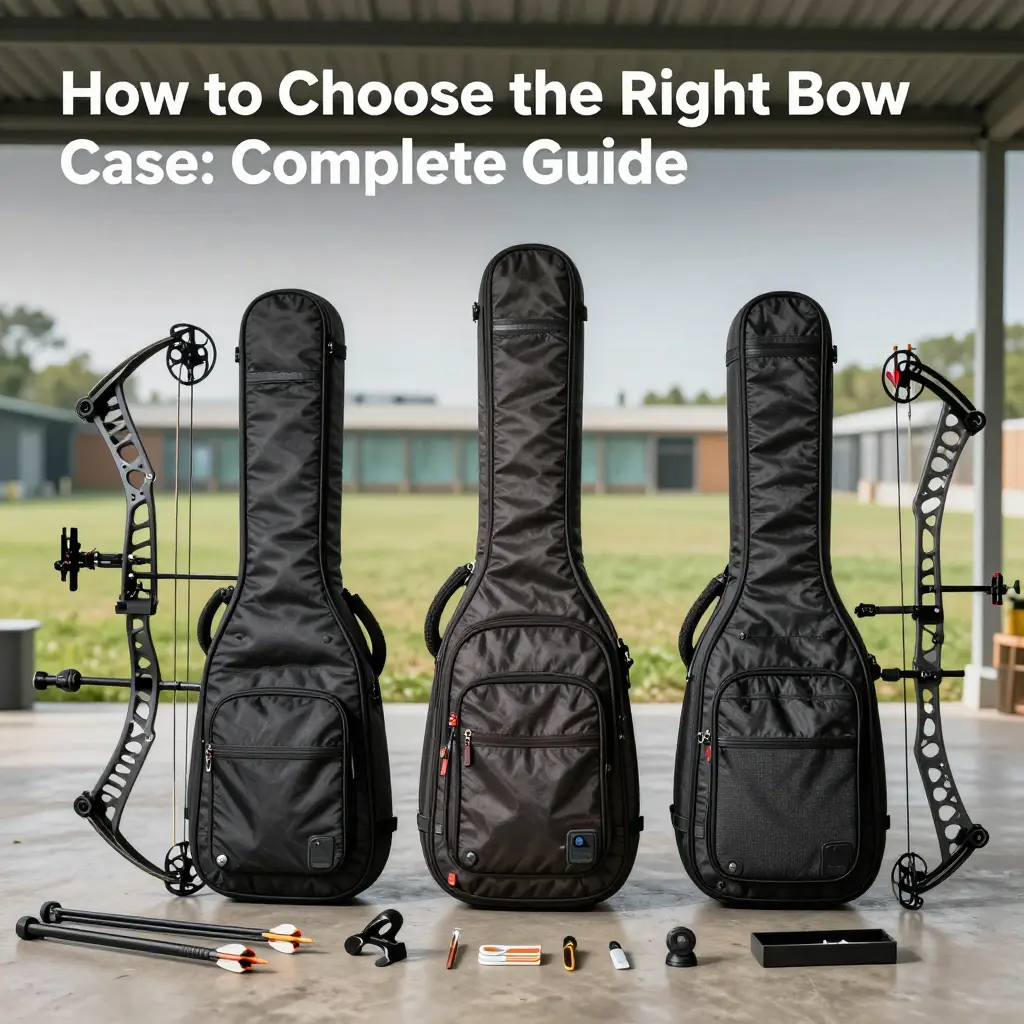
How to Choose the Right Bow Case: Complete Guide
Choosing the right bow case is about more than finding a bag that fits your bow. The right case should match your bow type, equipment configuration, transportation needs, storage requirements, and the level of protection you expect.
Why Choosing the Right Bow Case Matters
Your bow is only one part of an archery setup. Depending on the discipline and configuration, you may also carry arrows, a sight, stabilizer, quiver, release, tools, and other accessories. Transporting these items without suitable protection can make equipment organization difficult and can expose the setup to unnecessary knocks, dirt, moisture, and movement.
That is why the best bow case is not automatically the largest, most expensive, or hardest option available. It is the case that matches the way you actually use your equipment. A local range archer may value low weight and easy carrying, while someone who frequently transports valuable equipment may place greater importance on rigid protection, internal organization, and secure closures.
This guide walks through that decision from beginning to end. Rather than choosing a case by appearance alone, you can use your bow type, measurements, travel habits, storage needs, and protection requirements to narrow down the right design.
Start With Your Bow Type
The first question is simple: what type of bow are you carrying? Different bows can require different internal dimensions and layouts, so the case should be selected around the equipment it is intended to hold.
Compound Bow Cases
Compound setups can include sights, stabilizers, quivers, releases and other accessories. Check the case dimensions and internal layout carefully, especially if you want to transport the bow with equipment attached.
Recurve Bow Cases
Recurve cases can be designed around assembled bows or separate components. Take-down recurve equipment may require room for the riser, limbs, string, arrows and accessories.
Longbow Cases
Longbows require attention to overall length. A case that works for a shorter bow may not provide sufficient length for a longer traditional setup.
Junior and beginner equipment can also have different storage requirements. Before comparing materials or extra features, make sure the case is designed for the general type and configuration of bow you own.
Soft vs Hard vs Hybrid Bow Cases
Once you know what the case needs to hold, the next decision is the type of protection you want. Bow cases generally fall into three useful categories: soft, hard, and hybrid designs.
Soft Bow Cases
A soft bow case normally uses fabric construction with padding inside. Its main advantages are portability, flexibility, and easy storage. Many designs also include pockets or compartments for arrows and smaller accessories.
- Lightweight and easy to carry
- Convenient for local range trips
- Often easier to store when not in use
- Can include useful accessory pockets
- Usually provides less rigid impact protection than a hard case
A padded soft case can therefore be a practical option when convenience and everyday transportation matter more than maximum structural protection.
Hard Bow Cases
Hard cases use a rigid exterior to provide stronger protection against impact, crushing, and rough handling. Depending on the design, they may also provide weather resistance, lockable closures, wheels, and customizable interior foam.
- Strong structural protection
- Better suited to demanding transportation
- Many designs provide lockable closures
- Can offer substantial internal organization
- Usually heavier and bulkier than soft alternatives
For frequent travel or equipment that needs a higher level of physical protection, the additional weight and size of a hard case may be justified by the protection it provides.
Hybrid Bow Cases
Hybrid cases sit between traditional soft and hard designs. They can combine a flexible exterior with rigid reinforcement or protective internal structures. This approach can be useful when you want more structure than a basic soft case without choosing a fully rigid case.
| Feature | Soft Case | Hard Case | Hybrid Case |
|---|---|---|---|
| Weight | Light | Heavier | Medium |
| Protection | Basic to moderate | High structural protection | Moderate to high |
| Portability | Excellent | Moderate | Good |
| Storage | Usually compact | More space required | Moderate |
| Travel use | Depends on requirements | Often preferred for demanding travel | Depends on design |
How to Choose the Correct Bow Case Size
One of the easiest mistakes is choosing a case based on the bow's name or general category without checking the actual dimensions. A case can look suitable in a product photograph and still be too small once your accessories are installed.
Measure Your Bow Before Buying
Check the dimensions specified by the case manufacturer and compare them with the configuration you intend to transport. Depending on the case and bow, relevant measurements can include overall length, width, height, depth, and the space occupied by attached accessories.
Measure the Equipment You Will Actually Carry
If your bow normally travels with a sight, stabilizer, quiver, or other equipment, include those components when checking fit. A case that fits the bare bow may not accommodate the complete setup.
Do Not Choose Extremely Tight or Excessively Large Cases
A case should provide enough room for the intended equipment without forcing components against the interior. At the same time, excessive unused space can make equipment organization less efficient. The goal is a secure, practical fit.
The Most Important Bow Case Features
After determining the correct size and case type, look at the features that affect protection, organization, and everyday usability.
Padding and Cushioning
Interior padding helps separate the bow and accessories from the case exterior. Look at the thickness, density, placement, and overall construction of the padding rather than judging the case only by its appearance.
Foam and Internal Inserts
Some hard cases use customizable foam or shaped inserts to create a more controlled fit around the bow and accessories. This can be useful when transporting a specific equipment configuration.
Dedicated Arrow Space
If arrows travel with the bow, check whether the case includes an arrow tube, compartment, straps, or another suitable storage solution.
Accessory Compartments
Dedicated spaces for releases, tools, sights, stabilizers and smaller accessories can make transportation much easier and reduce loose equipment inside the main compartment.
Water and Dust Resistance
Outdoor archery can expose equipment to moisture, dirt and dust. If the case will regularly be used outside, review the manufacturer's information about weather resistance and sealing.
Locks and Closures
Lockable latches or other secure closure systems can be useful when equipment needs additional protection during transportation. For air travel, always confirm the current requirements of the carrier you are using.
Handles, Straps and Wheels
Consider how far you normally carry the case. Handles may be enough for local trips, while shoulder straps, backpack-style designs, or wheels can become more useful with heavier equipment.
Zippers, Hinges and Latches
A case is only useful when its closure and carrying components remain reliable. Check the quality of zippers, hinges, handles, latches, and other high-use hardware.
Choose a Bow Case Based on How You Travel
The same bow can require a different case depending on where it goes. Think about your normal transportation before paying for features that may not matter to you.
Local Range Trips
Prioritize manageable weight, convenient carrying, useful padding, and enough storage for the equipment you normally take to the range.
Vehicle Transportation
Consider stronger padding, internal organization, dust protection, and a construction that suits repeated movement inside a vehicle.
Hunting Trips
Outdoor users may place greater importance on durability, weather resistance, practical carrying options, and protection from environmental conditions.
Competition Travel
A well-organized case can make it easier to transport the bow, arrows, accessories and tools while keeping the setup protected between locations.
Air Travel
Air travel requires additional attention to case construction, locks, dimensions, weight, and the current rules of the airline and destination.
Travel Tip
Do not choose an air-travel case based only on the word “travel” in a product description. Check the current airline requirements before your trip and verify that the case you select satisfies those requirements.
How Much Storage Space Do You Need?
Case capacity should reflect your complete equipment routine. Some archers only need to protect the bow. Others want one organized case that carries most of the setup.
Bow-Only Cases
These can work when arrows and accessories are already stored separately. Their simpler layout can also make the case easier to carry and store.
Full-Equipment Cases
If you want the bow, arrows and accessories together, look for internal compartments, straps, pockets, or other organizational features designed for the equipment you own.
Avoid Overpacking
More storage is not automatically better. Loose tools and accessories can move around inside a case if they are not secured. Choose enough capacity for your actual setup and use the available compartments to keep equipment organized.
Which Bow Case Is Right for Different Archers?
There is no single case design that fits every archer. Your experience level, transportation habits, equipment value, and shooting environment all influence the practical choice.
| Archer Type | Characteristics to Consider |
|---|---|
| Beginner | Simple fit, useful padding, easy carrying and basic storage |
| Local Range Archer | Lightweight construction and convenient transportation |
| Frequent Traveler | Greater protection, secure closures and appropriate travel features |
| Hunter | Durability, weather protection and practical outdoor transport |
| Competition Archer | Organization, accessory capacity and reliable protection |
| Premium Equipment Owner | Higher protection and potentially custom-fit internal organization |
| Family or Club User | Practical organization and enough capacity for the equipment being transported |
Bow Case for Compound vs Recurve
Compound Bow Cases
Compound bows can have several components mounted around the main bow. Before buying a case, check whether your sight, stabilizer, quiver, and other accessories remain attached during transportation. If they do, make sure the interior dimensions allow adequate clearance.
Recurve Bow Cases
Recurve equipment can be transported as an assembled bow or as separate components, depending on the design. Take-down recurve cases may therefore prioritize storage for the riser, limbs, string, arrows, and related accessories.
Longbow Cases
For a longbow, overall length becomes one of the primary considerations. Always compare the bow's dimensions with the manufacturer's stated case dimensions.
The key principle is simple: choose the case around the configuration you actually transport, not simply around the general name of the bow.
Bow Case for Beginners: What Should You Prioritize?
Beginners do not necessarily need the most advanced case available. A practical beginner setup should first provide a correct fit and suitable protection for the way the equipment will be transported.
- Correct size: The bow should fit without unnecessary pressure.
- Adequate padding: Choose protection appropriate for your routine.
- Easy carrying: Make sure the case is practical to transport.
- Useful storage: Allow room for the accessories you actually use.
- Durable construction: Look for materials suitable for your environment.
- Reasonable budget: Pay for features that solve real needs.
Starting with these fundamentals makes the buying process much easier. You can always consider specialized features later as your equipment and transportation requirements change.
How to Choose a Bow Case: Step-by-Step Buying Process
If you are comparing several cases, use this sequence instead of jumping directly to price or appearance.
Common Bow Case Buying Mistakes
Measure the equipment before ordering and compare those measurements with the manufacturer's internal dimensions.
If accessories travel with the bow, include them when checking the required space.
A cheaper case may not provide the features required for your transportation environment. Compare construction, protection, storage and intended use.
If arrows travel with your bow, determine how they will be protected and organized.
A case suitable for a short drive may not be appropriate for more demanding transportation. Match the case to the journey.
Moisture can create problems for equipment and case interiors. Follow appropriate drying and storage practices before closing equipment away for longer periods.
Extra size and weight can reduce portability. Choose additional capacity when your equipment actually requires it.
How to Pack a Bow Case Properly
Choosing the right case is only part of protecting your equipment. Organization inside the case also matters.
Before Packing
- Inspect the bow and accessories.
- Remove unnecessary loose items.
- Check that the case interior is clean and suitable for the equipment.
Organize the Equipment
- Place the bow in the designated main compartment.
- Use dedicated arrow storage when available.
- Keep small accessories in appropriate pockets or compartments.
- Avoid allowing hard tools or loose equipment to press against sensitive components.
Check Before Closing
- Make sure nothing is being forced against the case.
- Confirm accessories are properly positioned.
- Check that zippers or latches close normally.
- Do not close equipment inside the case if moisture needs to be addressed first.
Bow Case Storage and Maintenance
A quality case still needs basic care. Dirt, moisture, damaged closures, and worn padding can reduce its usefulness over time.
Storing the Case at Home
Keep the case in an appropriate dry environment and avoid unnecessary exposure to moisture. The goal is to protect both the case and the equipment stored inside it.
After Outdoor Use
Inspect the case after trips to outdoor ranges or hunting locations. Remove visible dirt and allow appropriate drying when necessary before long-term storage.
Cleaning the Case
Follow the manufacturer's cleaning recommendations for the materials used. Pay attention to zippers, latches, handles, foam, and interior surfaces.
Inspect the Case Regularly
- Damaged zippers
- Broken or loose latches
- Worn handles or straps
- Damaged foam or padding
- Cracks in rigid shells
- Signs of water intrusion
When Should You Replace a Bow Case?
A case does not need to be replaced simply because it is old. Condition and function are more important. Consider replacing it when the case no longer provides the protection, fit, or security your equipment requires.
- The outer shell is damaged.
- Interior padding is significantly worn.
- Zippers or latches no longer secure the case properly.
- Handles or straps are no longer reliable.
- Water protection has deteriorated.
- Your equipment has changed and no longer fits safely.
- The case no longer suits your transportation requirements.
Bow Case Safety Checklist
A well-organized case helps keep archery equipment protected during storage and transportation. Before leaving with your equipment, run through this quick checklist.
Complete Your Archery Equipment Research
Choosing a bow case is one part of building a practical archery setup. Your bow type and arrow selection also influence how you organize and transport your equipment.
If you are still deciding between major bow types, read our guide: Compound Bow vs Recurve Bow: Which Should You Buy?
For another important part of equipment selection, see: How to Choose the Right Arrow for Your Bow: Complete Guide
Frequently Asked Questions About Bow Cases
What type of bow case is best?
The appropriate case depends on your bow type, transportation method, protection requirements, equipment configuration, and storage needs. There is no single case design that is ideal for every archer.
Is a hard bow case better than a soft case?
Hard cases generally provide greater structural protection, while soft cases prioritize lower weight and portability. The better option depends on how and where you transport your equipment.
What size bow case do I need?
Choose a case based on the actual dimensions of your bow and the equipment you intend to carry inside it. Check the manufacturer's internal dimensions before buying.
Can I use a compound bow case for a recurve bow?
Compatibility depends on the case's internal dimensions and intended design. Always compare the case layout with the specific recurve configuration you plan to transport.
Do I need a hard case for air travel?
Air travel involves additional handling and airline requirements. Check the current rules of the airline you are using and select a case that satisfies those requirements.
Are soft bow cases good for beginners?
A padded soft case can be practical for beginners when the main requirement is convenient local transportation and basic equipment protection.
Should my bow case have arrow storage?
If you normally transport arrows with your bow, dedicated arrow storage can make the setup more organized and can provide a more controlled way to carry them.
Are waterproof bow cases necessary?
That depends on your environment. Archers who regularly transport equipment outdoors may have more reason to prioritize weather-resistant construction than someone who mainly stores equipment indoors.
Can I store my bow in its case?
A bow can be stored in a suitable case when the equipment and case are kept in appropriate conditions. Avoid trapping unnecessary moisture inside the case and follow the equipment manufacturer's storage guidance.
When should I replace my bow case?
Consider replacement when the case is damaged, its padding or closures have deteriorated, it no longer fits your equipment properly, or it no longer provides the protection required for your transportation needs.
Final Bow Case Buying Checklist
Before purchasing, make sure you can answer “yes” to the important questions below:
Conclusion
Learning how to choose the right bow case becomes much easier when the decision is broken into the right order. Start with your bow type and actual equipment configuration. Then consider how you transport the setup, how much protection you need, how much storage space is useful, and which features will make the case easier to use.
A lightweight padded case can make sense for straightforward local transportation. A rigid case may be more appropriate when stronger protection, secure closures, or demanding travel requirements are involved. Hybrid designs can provide another option for archers looking for a balance between structure and portability.
Most importantly, do not choose a bow case based only on appearance or price. Bow type → Size → Protection → Storage → Travel → Features → Budget is a practical sequence for narrowing down the right option.
When the case fits your equipment properly and matches the way you actually use your bow, transportation and storage become simpler, more organized, and more predictable.
Build a Better-Organized Archery Setup
The right case protects more than the bow itself. It gives your complete archery setup a dedicated place for transportation and storage, helping you keep your equipment organized between range sessions, trips, and practice days.
Explore ArcheryDepotHow to Choose the Right Bow Case: Complete Guide
Choosing the right bow case is about more than finding a bag that fits your bow. The right case should match your bow type, equipment configuration, transportation needs, storage requirements, and the level of protection you expect.
Why Choosing the Right Bow Case Matters
Your bow is only one part of an archery setup. Depending on the discipline and configuration, you may also carry arrows, a sight, stabilizer, quiver, release, tools, and other accessories. Transporting these items without suitable protection can make equipment organization difficult and can expose the setup to unnecessary knocks, dirt, moisture, and movement.
That is why the best bow case is not automatically the largest, most expensive, or hardest option available. It is the case that matches the way you actually use your equipment. A local range archer may value low weight and easy carrying, while someone who frequently transports valuable equipment may place greater importance on rigid protection, internal organization, and secure closures.
This guide walks through that decision from beginning to end. Rather than choosing a case by appearance alone, you can use your bow type, measurements, travel habits, storage needs, and protection requirements to narrow down the right design.
Start With Your Bow Type
The first question is simple: what type of bow are you carrying? Different bows can require different internal dimensions and layouts, so the case should be selected around the equipment it is intended to hold.
Compound Bow Cases
Compound setups can include sights, stabilizers, quivers, releases and other accessories. Check the case dimensions and internal layout carefully, especially if you want to transport the bow with equipment attached.
Recurve Bow Cases
Recurve cases can be designed around assembled bows or separate components. Take-down recurve equipment may require room for the riser, limbs, string, arrows and accessories.
Longbow Cases
Longbows require attention to overall length. A case that works for a shorter bow may not provide sufficient length for a longer traditional setup.
Junior and beginner equipment can also have different storage requirements. Before comparing materials or extra features, make sure the case is designed for the general type and configuration of bow you own.
Soft vs Hard vs Hybrid Bow Cases
Once you know what the case needs to hold, the next decision is the type of protection you want. Bow cases generally fall into three useful categories: soft, hard, and hybrid designs.
Soft Bow Cases
A soft bow case normally uses fabric construction with padding inside. Its main advantages are portability, flexibility, and easy storage. Many designs also include pockets or compartments for arrows and smaller accessories.
- Lightweight and easy to carry
- Convenient for local range trips
- Often easier to store when not in use
- Can include useful accessory pockets
- Usually provides less rigid impact protection than a hard case
A padded soft case can therefore be a practical option when convenience and everyday transportation matter more than maximum structural protection.
Hard Bow Cases
Hard cases use a rigid exterior to provide stronger protection against impact, crushing, and rough handling. Depending on the design, they may also provide weather resistance, lockable closures, wheels, and customizable interior foam.
- Strong structural protection
- Better suited to demanding transportation
- Many designs provide lockable closures
- Can offer substantial internal organization
- Usually heavier and bulkier than soft alternatives
For frequent travel or equipment that needs a higher level of physical protection, the additional weight and size of a hard case may be justified by the protection it provides.
Hybrid Bow Cases
Hybrid cases sit between traditional soft and hard designs. They can combine a flexible exterior with rigid reinforcement or protective internal structures. This approach can be useful when you want more structure than a basic soft case without choosing a fully rigid case.
| Feature | Soft Case | Hard Case | Hybrid Case |
|---|---|---|---|
| Weight | Light | Heavier | Medium |
| Protection | Basic to moderate | High structural protection | Moderate to high |
| Portability | Excellent | Moderate | Good |
| Storage | Usually compact | More space required | Moderate |
| Travel use | Depends on requirements | Often preferred for demanding travel | Depends on design |
How to Choose the Correct Bow Case Size
One of the easiest mistakes is choosing a case based on the bow's name or general category without checking the actual dimensions. A case can look suitable in a product photograph and still be too small once your accessories are installed.
Measure Your Bow Before Buying
Check the dimensions specified by the case manufacturer and compare them with the configuration you intend to transport. Depending on the case and bow, relevant measurements can include overall length, width, height, depth, and the space occupied by attached accessories.
Measure the Equipment You Will Actually Carry
If your bow normally travels with a sight, stabilizer, quiver, or other equipment, include those components when checking fit. A case that fits the bare bow may not accommodate the complete setup.
Do Not Choose Extremely Tight or Excessively Large Cases
A case should provide enough room for the intended equipment without forcing components against the interior. At the same time, excessive unused space can make equipment organization less efficient. The goal is a secure, practical fit.
The Most Important Bow Case Features
After determining the correct size and case type, look at the features that affect protection, organization, and everyday usability.
Padding and Cushioning
Interior padding helps separate the bow and accessories from the case exterior. Look at the thickness, density, placement, and overall construction of the padding rather than judging the case only by its appearance.
Foam and Internal Inserts
Some hard cases use customizable foam or shaped inserts to create a more controlled fit around the bow and accessories. This can be useful when transporting a specific equipment configuration.
Dedicated Arrow Space
If arrows travel with the bow, check whether the case includes an arrow tube, compartment, straps, or another suitable storage solution.
Accessory Compartments
Dedicated spaces for releases, tools, sights, stabilizers and smaller accessories can make transportation much easier and reduce loose equipment inside the main compartment.
Water and Dust Resistance
Outdoor archery can expose equipment to moisture, dirt and dust. If the case will regularly be used outside, review the manufacturer's information about weather resistance and sealing.
Locks and Closures
Lockable latches or other secure closure systems can be useful when equipment needs additional protection during transportation. For air travel, always confirm the current requirements of the carrier you are using.
Handles, Straps and Wheels
Consider how far you normally carry the case. Handles may be enough for local trips, while shoulder straps, backpack-style designs, or wheels can become more useful with heavier equipment.
Zippers, Hinges and Latches
A case is only useful when its closure and carrying components remain reliable. Check the quality of zippers, hinges, handles, latches, and other high-use hardware.
Choose a Bow Case Based on How You Travel
The same bow can require a different case depending on where it goes. Think about your normal transportation before paying for features that may not matter to you.
Local Range Trips
Prioritize manageable weight, convenient carrying, useful padding, and enough storage for the equipment you normally take to the range.
Vehicle Transportation
Consider stronger padding, internal organization, dust protection, and a construction that suits repeated movement inside a vehicle.
Hunting Trips
Outdoor users may place greater importance on durability, weather resistance, practical carrying options, and protection from environmental conditions.
Competition Travel
A well-organized case can make it easier to transport the bow, arrows, accessories and tools while keeping the setup protected between locations.
Air Travel
Air travel requires additional attention to case construction, locks, dimensions, weight, and the current rules of the airline and destination.
Travel Tip
Do not choose an air-travel case based only on the word “travel” in a product description. Check the current airline requirements before your trip and verify that the case you select satisfies those requirements.
How Much Storage Space Do You Need?
Case capacity should reflect your complete equipment routine. Some archers only need to protect the bow. Others want one organized case that carries most of the setup.
Bow-Only Cases
These can work when arrows and accessories are already stored separately. Their simpler layout can also make the case easier to carry and store.
Full-Equipment Cases
If you want the bow, arrows and accessories together, look for internal compartments, straps, pockets, or other organizational features designed for the equipment you own.
Avoid Overpacking
More storage is not automatically better. Loose tools and accessories can move around inside a case if they are not secured. Choose enough capacity for your actual setup and use the available compartments to keep equipment organized.
Which Bow Case Is Right for Different Archers?
There is no single case design that fits every archer. Your experience level, transportation habits, equipment value, and shooting environment all influence the practical choice.
| Archer Type | Characteristics to Consider |
|---|---|
| Beginner | Simple fit, useful padding, easy carrying and basic storage |
| Local Range Archer | Lightweight construction and convenient transportation |
| Frequent Traveler | Greater protection, secure closures and appropriate travel features |
| Hunter | Durability, weather protection and practical outdoor transport |
| Competition Archer | Organization, accessory capacity and reliable protection |
| Premium Equipment Owner | Higher protection and potentially custom-fit internal organization |
| Family or Club User | Practical organization and enough capacity for the equipment being transported |
Bow Case for Compound vs Recurve
Compound Bow Cases
Compound bows can have several components mounted around the main bow. Before buying a case, check whether your sight, stabilizer, quiver, and other accessories remain attached during transportation. If they do, make sure the interior dimensions allow adequate clearance.
Recurve Bow Cases
Recurve equipment can be transported as an assembled bow or as separate components, depending on the design. Take-down recurve cases may therefore prioritize storage for the riser, limbs, string, arrows, and related accessories.
Longbow Cases
For a longbow, overall length becomes one of the primary considerations. Always compare the bow's dimensions with the manufacturer's stated case dimensions.
The key principle is simple: choose the case around the configuration you actually transport, not simply around the general name of the bow.
Bow Case for Beginners: What Should You Prioritize?
Beginners do not necessarily need the most advanced case available. A practical beginner setup should first provide a correct fit and suitable protection for the way the equipment will be transported.
- Correct size: The bow should fit without unnecessary pressure.
- Adequate padding: Choose protection appropriate for your routine.
- Easy carrying: Make sure the case is practical to transport.
- Useful storage: Allow room for the accessories you actually use.
- Durable construction: Look for materials suitable for your environment.
- Reasonable budget: Pay for features that solve real needs.
Starting with these fundamentals makes the buying process much easier. You can always consider specialized features later as your equipment and transportation requirements change.
How to Choose a Bow Case: Step-by-Step Buying Process
If you are comparing several cases, use this sequence instead of jumping directly to price or appearance.
Common Bow Case Buying Mistakes
Measure the equipment before ordering and compare those measurements with the manufacturer's internal dimensions.
If accessories travel with the bow, include them when checking the required space.
A cheaper case may not provide the features required for your transportation environment. Compare construction, protection, storage and intended use.
If arrows travel with your bow, determine how they will be protected and organized.
A case suitable for a short drive may not be appropriate for more demanding transportation. Match the case to the journey.
Moisture can create problems for equipment and case interiors. Follow appropriate drying and storage practices before closing equipment away for longer periods.
Extra size and weight can reduce portability. Choose additional capacity when your equipment actually requires it.
How to Pack a Bow Case Properly
Choosing the right case is only part of protecting your equipment. Organization inside the case also matters.
Before Packing
- Inspect the bow and accessories.
- Remove unnecessary loose items.
- Check that the case interior is clean and suitable for the equipment.
Organize the Equipment
- Place the bow in the designated main compartment.
- Use dedicated arrow storage when available.
- Keep small accessories in appropriate pockets or compartments.
- Avoid allowing hard tools or loose equipment to press against sensitive components.
Check Before Closing
- Make sure nothing is being forced against the case.
- Confirm accessories are properly positioned.
- Check that zippers or latches close normally.
- Do not close equipment inside the case if moisture needs to be addressed first.
Bow Case Storage and Maintenance
A quality case still needs basic care. Dirt, moisture, damaged closures, and worn padding can reduce its usefulness over time.
Storing the Case at Home
Keep the case in an appropriate dry environment and avoid unnecessary exposure to moisture. The goal is to protect both the case and the equipment stored inside it.
After Outdoor Use
Inspect the case after trips to outdoor ranges or hunting locations. Remove visible dirt and allow appropriate drying when necessary before long-term storage.
Cleaning the Case
Follow the manufacturer's cleaning recommendations for the materials used. Pay attention to zippers, latches, handles, foam, and interior surfaces.
Inspect the Case Regularly
- Damaged zippers
- Broken or loose latches
- Worn handles or straps
- Damaged foam or padding
- Cracks in rigid shells
- Signs of water intrusion
When Should You Replace a Bow Case?
A case does not need to be replaced simply because it is old. Condition and function are more important. Consider replacing it when the case no longer provides the protection, fit, or security your equipment requires.
- The outer shell is damaged.
- Interior padding is significantly worn.
- Zippers or latches no longer secure the case properly.
- Handles or straps are no longer reliable.
- Water protection has deteriorated.
- Your equipment has changed and no longer fits safely.
- The case no longer suits your transportation requirements.
Bow Case Safety Checklist
A well-organized case helps keep archery equipment protected during storage and transportation. Before leaving with your equipment, run through this quick checklist.
Complete Your Archery Equipment Research
Choosing a bow case is one part of building a practical archery setup. Your bow type and arrow selection also influence how you organize and transport your equipment.
If you are still deciding between major bow types, read our guide: Compound Bow vs Recurve Bow: Which Should You Buy?
For another important part of equipment selection, see: How to Choose the Right Arrow for Your Bow: Complete Guide
Frequently Asked Questions About Bow Cases
What type of bow case is best?
The appropriate case depends on your bow type, transportation method, protection requirements, equipment configuration, and storage needs. There is no single case design that is ideal for every archer.
Is a hard bow case better than a soft case?
Hard cases generally provide greater structural protection, while soft cases prioritize lower weight and portability. The better option depends on how and where you transport your equipment.
What size bow case do I need?
Choose a case based on the actual dimensions of your bow and the equipment you intend to carry inside it. Check the manufacturer's internal dimensions before buying.
Can I use a compound bow case for a recurve bow?
Compatibility depends on the case's internal dimensions and intended design. Always compare the case layout with the specific recurve configuration you plan to transport.
Do I need a hard case for air travel?
Air travel involves additional handling and airline requirements. Check the current rules of the airline you are using and select a case that satisfies those requirements.
Are soft bow cases good for beginners?
A padded soft case can be practical for beginners when the main requirement is convenient local transportation and basic equipment protection.
Should my bow case have arrow storage?
If you normally transport arrows with your bow, dedicated arrow storage can make the setup more organized and can provide a more controlled way to carry them.
Are waterproof bow cases necessary?
That depends on your environment. Archers who regularly transport equipment outdoors may have more reason to prioritize weather-resistant construction than someone who mainly stores equipment indoors.
Can I store my bow in its case?
A bow can be stored in a suitable case when the equipment and case are kept in appropriate conditions. Avoid trapping unnecessary moisture inside the case and follow the equipment manufacturer's storage guidance.
When should I replace my bow case?
Consider replacement when the case is damaged, its padding or closures have deteriorated, it no longer fits your equipment properly, or it no longer provides the protection required for your transportation needs.
Final Bow Case Buying Checklist
Before purchasing, make sure you can answer “yes” to the important questions below:
Conclusion
Learning how to choose the right bow case becomes much easier when the decision is broken into the right order. Start with your bow type and actual equipment configuration. Then consider how you transport the setup, how much protection you need, how much storage space is useful, and which features will make the case easier to use.
A lightweight padded case can make sense for straightforward local transportation. A rigid case may be more appropriate when stronger protection, secure closures, or demanding travel requirements are involved. Hybrid designs can provide another option for archers looking for a balance between structure and portability.
Most importantly, do not choose a bow case based only on appearance or price. Bow type → Size → Protection → Storage → Travel → Features → Budget is a practical sequence for narrowing down the right option.
When the case fits your equipment properly and matches the way you actually use your bow, transportation and storage become simpler, more organized, and more predictable.
Build a Better-Organized Archery Setup
The right case protects more than the bow itself. It gives your complete archery setup a dedicated place for transportation and storage, helping you keep your equipment organized between range sessions, trips, and practice days.
Explore ArcheryDepot