

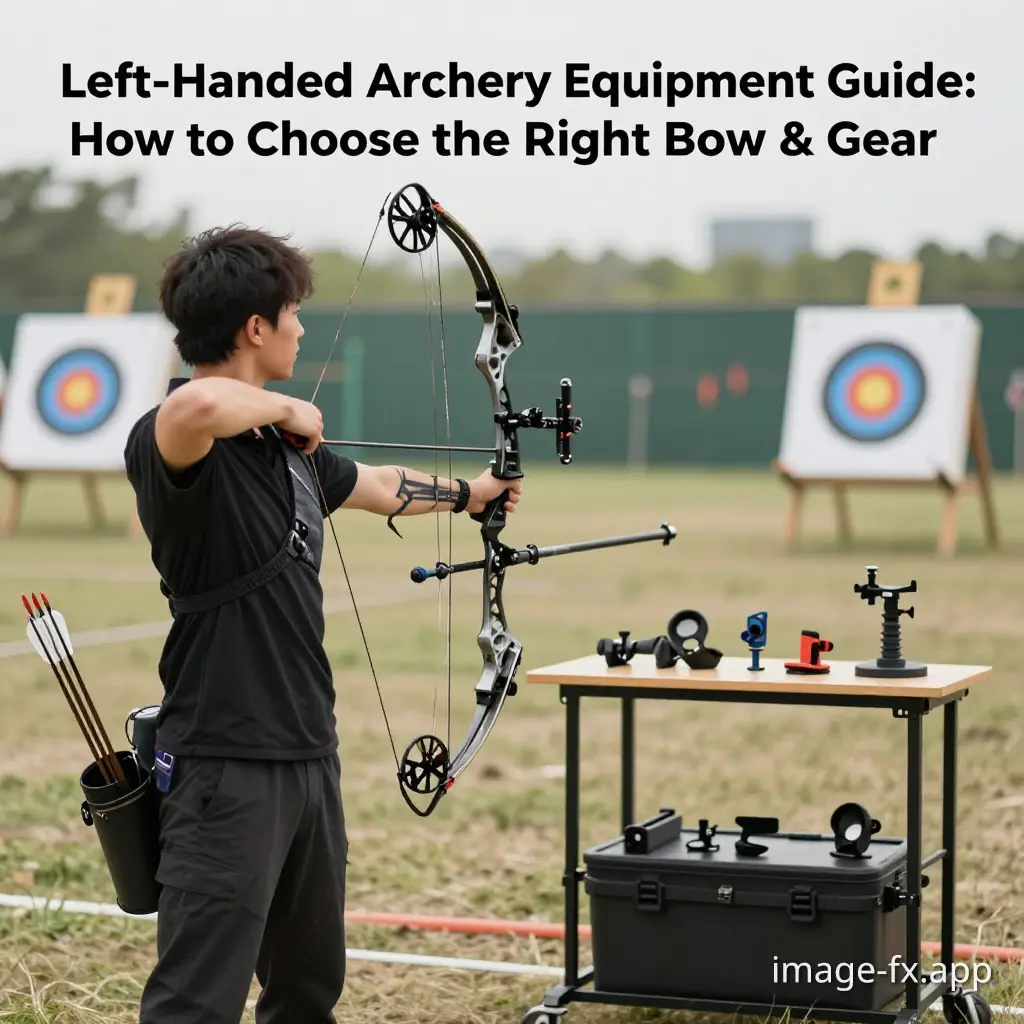
Left-Handed Archery Equipment Guide: How to Choose the Right Bow & Gear
Choosing the right left-handed archery equipment starts with understanding your shooting configuration. From eye dominance and bow selection to accessories, availability and setup, every part of the equipment should work together.
Buying archery equipment as a left-handed archer can sometimes be confusing. The biggest mistake is to start by searching for a bow labeled “left-handed” without first understanding what that configuration actually means.
In archery, your writing hand is not the only factor that matters. Eye dominance, shooting side, bow configuration and accessory compatibility all connect. Once those points are established, choosing the rest of your equipment becomes much more straightforward.
Start with eye dominance and shooting configuration, then choose a bow that fits those requirements before selecting compatible accessories.
What Does “Left-Handed” Mean in Archery?
The term “left-handed” in archery describes the way the bow is configured for the archer. It is different from simply saying that someone is left-handed in everyday life.
A left-handed archer generally draws the bowstring with the left hand and holds the bow with the right hand. Because the bow is designed around this arrangement, the riser, arrow rest, sight position and other components need to match the intended configuration.
Left-Handed Archer
The archer uses the left hand as the drawing hand while the bow is held in the right hand. The equipment should be selected to support that shooting configuration.
Left-Handed Bow
A left-handed bow is manufactured or configured for the corresponding shooting orientation. Its design determines how compatible accessories are mounted and positioned.
This distinction is important because a person may identify as left-handed outside archery but still need to think carefully about their shooting side. That brings us to the first major decision: eye dominance.
Eye Dominance Comes Before Choosing Your Bow
Eye dominance is important because archery is a visual alignment sport. When you aim, one eye may naturally provide the stronger reference for alignment. Therefore, choosing equipment based only on the hand you use for writing can lead to an incorrect assumption about your preferred shooting configuration.
What Is Eye Dominance?
Eye dominance describes the eye your visual system naturally favors when aligning with a target. For an archer, knowing this can help clarify which shooting side feels most natural and how the equipment should be configured.
Left-Handed but Right-Eye Dominant
A person can be left-handed while having a dominant right eye. This is commonly referred to as cross-dominance. In this situation, it is especially useful to confirm the preferred shooting configuration before buying a bow.
Right-Handed but Left-Eye Dominant
The opposite combination can occur as well. Someone who normally uses the right hand may have a dominant left eye. This is another reason that everyday handedness should not be treated as the only factor in equipment selection.
Why This Matters
Before comparing bow models, establish your eye dominance and understand which shooting configuration you intend to use. This gives you a clear starting point for every equipment decision that follows.
How to Determine Your Dominant Eye
A simple eye-dominance test can provide a useful starting point. The purpose is to identify which eye naturally maintains alignment with a distant object.
A Simple Eye-Dominance Test
Extend your hands in front of you and create a small opening between them. With both eyes open, focus on a distant object through that opening. Close one eye and then the other. The eye that keeps the object aligned with the opening is generally considered the dominant eye in this basic test.
Confirm the Result
If the result is unclear, repeat the test rather than immediately choosing equipment. Beginners can also ask an experienced archery instructor to help determine the most appropriate shooting configuration.
What If Your Handedness and Eye Dominance Conflict?
Cross-dominance does not prevent someone from participating in archery. It simply means the shooting side deserves more careful consideration before purchasing a complete equipment setup.
Once this point is clear, you can move from deciding which side to shoot toward deciding which bow fits that configuration.
How to Choose a Left-Handed Bow
With your shooting configuration established, the bow becomes the foundation of the entire setup. Every accessory you select later needs to work with this starting point.
Choose the Correct Bow Configuration
First, confirm that the bow is designed for the intended shooting side. This is particularly important with compound bows because their risers and cam systems are built around a specific configuration.
Match the Bow to Your Draw Length
Draw length is part of proper bow fit. The bow should be appropriate for the archer's physical dimensions and the manufacturer's stated adjustment range. A correct handedness configuration alone does not guarantee that the bow is the right fit.
Consider Draw Weight
Draw weight should also match the archer's experience and ability to control the equipment. For beginners, a manageable setup is generally more useful for learning consistent form than simply choosing a higher specification.
Compound or Recurve?
The choice between a compound and recurve bow is separate from the question of handedness. Both can be available in left-handed configurations, but the equipment and accessories used with each type can differ.
| Consideration | Compound Bow | Recurve Bow |
|---|---|---|
| Configuration | Left/right configuration should be confirmed. | Left/right configuration should be confirmed. |
| Draw system | Uses cams and a mechanical system. | Uses traditional limbs without compound cams. |
| Accessories | May include a sight, rest, stabilizer, release and quiver. | Configuration varies according to shooting style. |
| Beginner considerations | Fit and complete setup are important. | Can offer a simpler equipment configuration. |
Left-Handed vs Right-Handed Bow: What Actually Changes?
Once you understand the shooting configuration, the difference between left-handed and right-handed equipment becomes much easier to understand. The important point is that the configuration affects how the archer, bow and accessories work together.
| Feature | Left-Handed Configuration | Right-Handed Configuration |
|---|---|---|
| Drawing hand | Left hand | Right hand |
| Bow hand | Right hand | Left hand |
| Bow orientation | Designed for left-handed shooting | Designed for right-handed shooting |
| Arrow rest | Must match the bow configuration | Must match the bow configuration |
| Sight | Check left-hand compatibility | Check right-hand compatibility |
| Other accessories | Check individual compatibility | Check individual compatibility |
This is why buying the bow first is important. Once the bow configuration is established, you can check each accessory against that specific setup instead of trying to make unrelated components work together.
Essential Left-Handed Archery Equipment
A complete setup includes more than the bow. Some accessories are universal, some are available in left- and right-handed versions, and some are ambidextrous. The safest approach is to check each component individually.
Bow
The bow establishes the shooting configuration. Confirm its handedness, draw-length range and other manufacturer specifications before ordering.
Arrow Rest
The arrow rest must work with the riser and intended shooting configuration. Check mounting style and compatibility for the exact model.
Bow Sight
Some sights are side-specific, while others are reversible or designed for multiple configurations. Always verify the product specification.
Release Aid
Compound-bow shooters should check the release aid's hand configuration before adding it to the setup.
Quiver
Check how the quiver mounts to the bow and whether its intended position works with the selected configuration.
Finger Tab or Glove
Recurve and traditional archers using a finger release should select appropriate protection for the drawing hand.
Which Archery Accessories Are Actually Left-Handed?
This is where many beginners become confused. Not every accessory needs to be left-handed. Some products are side-specific, while others are designed to work in more than one configuration.
| Equipment | Can It Be Side-Specific? | What to Check |
|---|---|---|
| Bow | Yes | Manufacturer's shooting configuration |
| Arrow rest | Often | Riser and mounting orientation |
| Sight | Sometimes | Left, right or ambidextrous design |
| Release aid | Sometimes | Hand configuration |
| Quiver | Often | Mounting arrangement |
| Finger protection | Yes | Drawing hand |
| Stabilizer | Usually less restrictive | Mounting system |
Ambidextrous vs Left-Handed Archery Equipment
An ambidextrous product is designed to accommodate more than one shooting configuration. This can be useful for certain accessories, but it should not be interpreted as meaning that every component of an archery setup is interchangeable.
When Ambidextrous Equipment Can Be Useful
Ambidextrous accessories can be practical when equipment is shared between archers or when the manufacturer specifically designs the product for multiple configurations.
When a Dedicated Left-Handed Product Is Needed
Some equipment is designed around one specific configuration. A bow is the clearest example, but certain rests, sights, releases and quivers can also have side-specific versions.
Always Check the Exact Model
Do not assume that words such as “universal,” “reversible” or “ambidextrous” guarantee compatibility with every bow. The manufacturer's specifications for the exact model should be the final reference.
Why Left-Handed Archery Equipment Can Be Harder to Find
After choosing the correct bow and accessories, availability becomes the next practical consideration. Left-handed versions may be stocked less frequently than right-handed versions, depending on the retailer and product.
Retail Stock Can Be More Limited
A local shop may have fewer left-handed models available immediately. This does not necessarily mean the product is unavailable; it may simply need to be sourced.
Some Products May Be Special Order
Specific left-handed configurations may require an order from a manufacturer or distributor. Availability can depend on the model, finish, configuration and current inventory.
Online Retailers vs Local Archery Shops
| Option | Potential Benefit | Important Consideration |
|---|---|---|
| Online retailer | Broader product selection and easy comparison. | Specifications and compatibility must be checked carefully. |
| Local archery shop | Hands-on guidance and equipment fitting. | Left-handed inventory may be limited. |
| Special order | Access to a specific configuration. | May require additional waiting time. |
Do Left-Handed Bows Cost More?
There is no universal rule that left-handed bows must cost more than right-handed versions. Pricing depends on the manufacturer, model, configuration, retailer and availability.
Price and Availability Are Different Issues
A limited-stock product may be harder to find without necessarily having a different standard price. For that reason, compare the same model and configuration rather than comparing unrelated products.
Compare the Exact Configuration
When comparing prices, check the same bow model, specifications and included components. This gives you a more meaningful comparison than simply looking at the left- and right-handed labels.
Common Buying Mistakes Left-Handed Archers Should Avoid
Most equipment problems can be prevented by following the selection process in the correct order. The following mistakes usually happen when one step is skipped.
Choosing Based Only on Writing Hand
Everyday handedness does not tell you everything about shooting configuration. Eye dominance should be considered first.
Buying the Wrong Bow Configuration
Confirm the manufacturer's left- or right-handed specification before buying.
Forgetting Accessory Compatibility
The bow may be correct while the selected rest, sight, release or quiver is incompatible.
Assuming Every Sight Is Universal
Check whether the exact sight supports your configuration instead of relying on appearance alone.
Ignoring Availability
Check stock and special-order status before building your purchase around a specific model.
Ignoring Bow Fit
Correct handedness is only the beginning. Draw length and draw weight also need to suit the archer.
How to Buy the Right Left-Handed Archery Setup
By this point, the individual decisions can be brought together into one simple buying process. Start with the archer, move to the bow, and then build the accessories around that bow.
Determine Eye Dominance
Identify which eye naturally provides the stronger visual reference.
Confirm Your Shooting Side
Use your eye dominance and intended shooting configuration rather than relying only on your writing hand.
Choose Compound, Recurve or Traditional
Select the bow type that matches your intended style and experience.
Check Draw Length
Make sure the bow and its adjustment range suit your required draw length.
Consider Draw Weight
Choose a manageable setup that suits your experience and physical ability.
Confirm Bow Handedness
Verify the exact left-handed configuration from the manufacturer or retailer.
Match the Accessories
Check the rest, sight, release, quiver and other components against the bow.
Check Availability
Confirm whether the complete configuration is in stock or requires special order.
Review Manufacturer Specifications
Use the current specifications for the exact model before ordering.
Get Professional Help When Needed
A qualified archery professional can help verify fit and configuration.
Left-Handed Archery Setup for Beginners
Beginners do not need to purchase every possible accessory at once. Once the shooting side has been established, the priority should be a correctly configured and appropriately fitted bow.
Start With the Essentials
Build the Setup Gradually
A simple setup is easier to understand than a collection of accessories purchased without a clear compatibility plan. Start with the core equipment, learn how the system works, and add accessories according to your actual needs.
Why a Local Archery Shop Can Help
A qualified archery professional can be particularly useful when you are uncertain about eye dominance, bow configuration, fit or accessory compatibility. This can help prevent purchasing equipment that does not work together.
Left-Handed Compound Bow Setup
Compound equipment should be treated as a complete system. After selecting the correct left-handed bow, every major accessory should be checked against that configuration.
Bow Configuration
Confirm the bow is manufactured for the intended shooting side.
Draw Length and Draw Weight
Confirm that the bow's adjustment range and draw-weight specifications suit the archer.
Arrow Rest and Sight
Both components should be compatible with the bow's riser and shooting configuration.
Release Aid and Quiver
Check the release aid's hand configuration and the quiver's mounting system before purchasing the final accessories.
Left-Handed Recurve Bow Setup
Recurve setups can be simpler, but the same compatibility principle applies. Start with the correct riser and bow configuration, then select the components that support it.
Riser and Bow Configuration
Confirm that the riser and bow are intended for the selected shooting side.
Arrow Rest or Shelf
Depending on the bow and shooting style, the arrow may be used with a rest or from the shelf. The selected arrows and accessories should suit that setup.
Finger Tab or Glove
If shooting with fingers, choose suitable protection for the hand drawing the string.
Sight
If a sight is being used, confirm that its mounting arrangement works with the selected riser.
Left-Handed Archery and Shooting Technique
Once the equipment is correctly configured, technique becomes the next part of the process. The purpose of this section is not to replace coaching, but to explain why a consistent setup matters.
Bow-Hand Position
Keep the bow hand position consistent so that the bow is held in the same manner from shot to shot.
Draw-Hand Position
The drawing hand should work naturally with the selected shooting configuration and remain consistent throughout the shooting sequence.
Stance and Alignment
A repeatable stance provides a stable foundation for alignment and shooting. Beginners should focus on consistency rather than constantly changing their position.
Anchor and Release
A consistent anchor and release help establish a repeatable shooting sequence. If either feels difficult to maintain, professional instruction can be useful.
Sight Picture
Once the bow and sight are correctly configured, the archer can develop a consistent visual reference to the target.
Left-Handed Archery Equipment Compatibility Checklist
Before placing an order, use this final compatibility check. It brings together the decisions made throughout the guide.
Safety Considerations for Left-Handed Archers
Left-handed equipment follows the same fundamental safety principles as other archery equipment. The important point is to use compatible equipment and follow the manufacturer's instructions for the specific model.
Use Compatible Equipment
Never assume that a component will work simply because it looks physically similar to another model.
Inspect Equipment
Follow the manufacturer's inspection and maintenance recommendations for your specific equipment.
Follow Manufacturer Guidance
Manufacturer specifications should take priority when configuring individual components.
Use an Appropriate Range
Practice in a suitable archery environment and follow the range's established safety rules.
Frequently Asked Questions
Does being left-handed automatically mean I need a left-handed bow?
No. Everyday handedness is only one consideration. Eye dominance and shooting configuration should also be considered before selecting a bow.
How do I know which eye is dominant?
A basic eye-dominance test can provide a starting point. If the result is unclear, repeat the test or ask an experienced archery instructor for assistance.
What if I am left-handed but right-eye dominant?
This is commonly described as cross-dominance. It means you should pay particular attention to shooting-side selection before purchasing equipment.
What is a left-handed bow?
A left-handed bow is configured for the corresponding shooting orientation, with the archer generally drawing the string with the left hand and holding the bow with the right hand.
Are left-handed archery accessories harder to find?
Availability varies by product and retailer. Some left-handed models may be less commonly stocked and may require special ordering.
Are left-handed bows always more expensive?
No. Price depends on the specific model, manufacturer, retailer, configuration and availability.
Can I use an ambidextrous sight on a left-handed bow?
Some sights are designed for multiple configurations, but compatibility should always be confirmed for the exact sight and bow combination.
Do left-handed compound bows need special accessories?
Some compound-bow accessories are side-specific while others are ambidextrous. The arrow rest, sight, release and quiver should each be checked individually.
Do left-handed recurve bows use different equipment?
Some components can depend on the shooting configuration, including the riser, arrow rest and certain accessories. The exact bow specification should be checked.
Should a beginner buy left-handed equipment online?
Online retailers can provide a broader selection, while a local archery shop can provide hands-on help with configuration and fit. Either option can work when the product specifications are carefully checked.
Continue Your Archery Equipment Research
Once you have established the correct bow configuration, arrow selection is the next important part of building a complete setup.
How to Choose the Right Arrow for Your Bow: Complete Guide
If you are still deciding between major bow types, continue with our Compound Bow vs Recurve Bow guide .
Final Left-Handed Archery Buying Checklist
Choosing the right left-handed archery equipment becomes much easier when the decisions are made in the correct order.
Start with eye dominance, confirm your shooting side, and then select a bow that matches that configuration. From there, check draw length and draw weight before moving on to the arrow rest, sight, release, quiver and other accessories.
Finally, confirm availability and review the manufacturer's specifications for every component. If you are new to archery or uncertain about the correct configuration, professional guidance can help you build a setup that works together from the beginning.
Editorial note: Archery equipment specifications and compatibility can vary by manufacturer and model. Always verify the current manufacturer's specifications for the exact product before purchasing or configuring equipment.